
THE OCKHAM LECTURE
The Merton College Physics Lecture
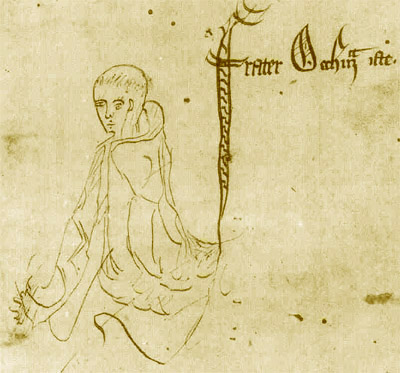
Numquam ponenda est pluralitas sine necessitate
The Merton
College Physics Lecture (the Ockham, or Occam, Lecture, so
named in honour of one of the greatest, if unattested [1], alumni of the College and of his
philosophical principle of intellectual discipline) started in
2009 and is held once a term. It is organised by the physics
tutors of the College to promote both intellectual curiosity
and social cohesion of the Merton Physics
community. Attendance is by invitation. All Merton physicists
(and sympathisers!) belonging to the three Common Rooms (JCR,
MCR and SCR) are invited, as are the Old Members. Their guests
will also be accommodated, space permitting.
Those who are planning (or aspiring) to attend are asked to email A. Schekochihin and simultaneously to sign up for dinner in Hall in the usual manner. Also please email him if you wish to nominate a speaker for one of the future Lectures.
The Lecture's page on the College's official website is here. The Ockham (Occam) Lecture Facebook page is here. It contains photos from previous events, announcements, sundry postings etc., all completely unofficial but warmly encouraged. You can also confirm your attendance via Facebook.
Those who are planning (or aspiring) to attend are asked to email A. Schekochihin and simultaneously to sign up for dinner in Hall in the usual manner. Also please email him if you wish to nominate a speaker for one of the future Lectures.
The Lecture's page on the College's official website is here. The Ockham (Occam) Lecture Facebook page is here. It contains photos from previous events, announcements, sundry postings etc., all completely unofficial but warmly encouraged. You can also confirm your attendance via Facebook.
| 47th Lecture Hilary 2027 |
Professor
Vikram Deshpande FREng FRS Professor of Materials Engineering, Department of Engineering, University of Cambridge webpage Google Scholar wikipedia Lecturer introduced by TBA |
TBA Tba |
TBA TS Eliot LT 17:00 Reception 17:30 Lecture 19:15 Dinner in Hall After dinner all are welcome to MCR |
| 46th Lecture Michaelmas 2026 & Merton Mathematics Lecture |
Anne
Keast-Butler Merton College (BA in Mathematics 1991; Honorary Fellow 2024) Director, GCHQ (since 2023) Former Deputy Director General, MI5 webpage wikipedia Lecturer introduced by TBA |
TBA/TBC Tba/tbc |
TBA TS Eliot LT 17:00 Reception 17:30 Lecture 19:15 Dinner in Hall After dinner all are welcome to MCR |
| 45th
Lecture Trinity 2026 |
Professor
Yang-hui He Lecturer in Mathematics (& former Fitzjames Research Fellow), Merton College Fellow, London Institute for Mathematical Sciences, Royal Institution of Great Britain Honorary Professor of Mathematics, City St George's, University of London Honorary Chang-Jiang Chair Professor in Physics Nan Kai University, China webpage Google Scholar wikipedia Lecturer introduced by Prof Subir Sarkar |
From Geometry, to
Physics, to the AI-theorist Inspired by initial
experiments in geometry and string theory in 2017, I
summarise how this emerging field of AI-guided
discovery in theoretical physics and pure mathematics
has grown over the past years, and show how various
machine-learning algorithms can help with pattern
detection across disciplines ranging from algebraic
geometry to representation theory, to combinatorics,
and to number theory. At the
heart of the programme is the question of how AI will
reshape the future of the mathematical sciences.
|
Tuesday June 2 (week VI) TS Eliot LT 17:00 Reception 17:30 Lecture 19:15 Dinner in Hall After dinner all are welcome to MCR Sign up on |
| 44th Lecture Hilary 2026 |
Professor
Mireia Crispin-Ortuzar Oxford DPhil in Experimental Particle Physics (2015) Assistant Professor and Group Leader, Early Cancer Institute, Department of Oncology, University of Cambridge Co-Lead, Ovarian Cancer Programme & Mark Foundation Institute, Cancer Research UK Cambridge Centre Chief Digital Officer, 52North Health webpage Google Scholar Lecturer introduced by Prof Alan Barr |
Always on Call: AI in
Oncology When a pathologist
looks down a microscope at a tumor sample, what do
they actually see, and what decisions depend on that
moment? This lecture takes the pathology slide as a
starting point to explore how algorithms are
increasingly used, and sometimes not used, in cancer
care. AI for image analysis is everywhere in research
and the media, but where does it genuinely appear in
clinical practice, and where does it fall short? Using examples from computational
pathology, medical imaging, and the integration of
molecular and clinical data, I will discuss how
algorithms attempt to extract information across
spatial scales, from cells to whole tumors, and why
this remains a hard problem. We will examine what is
missing for AI to be reliably "always on call" in
oncology, and why algorithms are more likely to change
how clinicians work than to replace them.
|
Tuesday February 10 (week IV) TS Eliot LT 17:00 Reception 17:30 Lecture 19:15 Dinner in Hall After dinner all are welcome to Mure Room Sign up on |
| 43rd Lecture Michaelmas 2025 |
Professor
Myles Allen CBE FRS Merton SCR Professor of Geosystem Science, School of Geography and the Environment, Head of Atmospheric, Oceanic and Planetary Physics, Department of Physics, University of Oxford Gresham Frank Jackson Foundation Professor of the Environment, Gresham College webpage wikipedia Google Scholar Lecturer introduced by the Vice-Chancellor, Prof Irene Tracey CBE FRS FMedSci |
Equations
and Equality: Physics, People, and Power in a Changing
Climate On the walls of the RER-B station in the Gare du Nord there are some equations, inspired by Suki Manabe's papers from the 1960s, that purport to be "the logical basis for understanding" the greenhouse effect and climate change. I think you are meant to gaze at them and be convinced. I don't think they work. But, as physicists, how should we explain what we do to people who feel excluded and threatened by the very tools of our trade? When I was an undergraduate (PhysPhil, 1984-87), physicists had a straightforward reply to anyone questioning their authority, expressable in Megatonnes of TNT. Inspired by this success, the 20th century saw physicists and physicists' way of thinking permeate everywhere from economics to epidemiology. But in an age of pandemics and global warming, that authority is on the wane. People no longer meekly obey when told to "lockdown" or "reduce emissions by 45%" because our mathematical models say they should. I have spent much of my career trying to translate physics into the legal jargon of IPCC reports. But perhaps the solution is not less physics, but more. How can we make our quantitative reasoning accessible to all, so people can make up their own minds, informed not just by authority, but by genuine understanding? What climate equations would I put on the wall of RER-B? |
Thursday October 30 (week III) TS Eliot LT 17:00 Reception 17:30 Lecture 19:15 Dinner in Hall After dinner all are welcome to the JCR Sign up on |
| 42nd Lecture Trinity 2025 |
Professor
Samuel Fletcher Fellow (2024) and Tutor in Philosophy, Merton College Professor of Philosophy of Physics, University of Oxford webpage Google Scholar Lecturer introduced by the Warden, Prof Jennifer Payne |
The Meaning of
Relativity: What It Was, What It Is, and What It Could
Be No modern physical
theories are as uniquely the creation of a single mind
as Albert Einstein's theories of special and general
relativity. Yet what these theories say about space,
time, and gravitation has not been fixed by Einstein's
pen. Indeed, the dominant interpretations of
relativity theory differ substantially from what
Einstein originally envisaged and maintained. In
addition to tracing how these interpretations shifted
and why, I look to the future for how the
interpretation of general relativity in particular
aids in the search for a quantum theory of gravity,
and how, conversely, developments in quantum gravity
may bear upon the interpretation of general
relativity.
|
Tuesday May 13 (week III) TS Eliot LT 17:00 Reception 17:30 Lecture 19:15 Dinner in Hall After dinner all are welcome to the MCR Sign up on |
| 41st Lecture Hilary 2025 |
Professor
Vijay Balasubramanian George Eastman Visiting Professor, University of Oxford & Balliol College Cathy & Marc Lasry Professor, Department of Physics and Astronomy, University of Pennsylvania, Philadelphia, USA webpage wikipedia Google Scholar page at Balliol Lecturer introduced by Prof Alan Barr |
Occam's Razor: Are Simple Explanations
Better? William of Ockham (c. 1278-1347), who
studied theology at Oxford, inspired what scientists
now call Occam's Razor, a principle of parsimony in
reasoning about the world which holds that simpler
models are better. This principle built on ideas
circulating among Scholastic philosophers of his day,
including Duns Scotus (c. 1265-1308), who maintained
that "Pluralitas non est ponenda sine
necessitate," or "Plurality should not be
posited without necessity." Ockham wielded this
principle like a scalpel to cut away unnecessary parts
of an argument. But why? Is it true that simpler
explanations are closer to the truth, and what do
"simpler" and "better" mean, anyway? I will address
these questions by discussing mathematical and
physical reasons for why bounded agents with limited
resources may achieve more accurate descriptions of
phenomena by using simpler models.
|
Tuesday January 28 (week II) TS Eliot LT 17:00 Reception 17:30 Lecture 19:15 Dinner in Hall After dinner all are welcome to the MCR Sign up on |
| 40th Lecture Michaelmas 2024 |
Professor
Tunde Fulop Visiting Research Fellow, Merton College Full Professor of Physics & Head of Plasma Theory Group, Division of Subatomic, High-Energy and Plasma Physics, Department of Physics, Chalmers University of Technology, Gothenburg, Sweden Member of the Royal Swedish Academy of Sciences and the European Academy of Sciences Alfven Prize, 2024 webpage Google Scholar Lecturer introduced by Prof Alex Schekochihin |
Creating and Controlling Beams in Plasmas
Electron acceleration and its associated
radiation in plasmas has fascinated humankind with its
beauty for centuries. It occurs in such diverse
phenomena as laser-produced plasmas, electrical
discharges associated with thunderstorms, aurorae in
planetary magnetospheres, solar flares and fusion
plasmas. However, the natural beauty of the observable
signatures of these processes is not the only reason
we are interested in them. Understanding their causes,
characteristics and consequences has practical
importance in several fields, ranging from energy
generation to protection against solar storms. In this
lecture, I will describe examples of relativistic
electron beams in laboratory plasmas, as well as
strategies for how to create and control them.
|
Tuesday November 5 (week IV) TS Eliot LT 17:00 Reception 17:30 Lecture 19:15 Dinner in Hall After dinner all are welcome to the MCR Sign up on |
| 39th Lecture Trinity 2024 |
Malcolm
Crick Merton College (1977) Director of the Secretariat (2005-17), United Nations Scientific Committee on the Effects of Atomic Radiation (UNSCEAR), Vienna Head (1996-2005), Incident & Emergency Centre, International Atomic Energy Authority Order of the Rising Sun, Japan (2022) UNSCEAR webpage IAEA IEC webpage Lecturer introduced by the Warden, Prof Jennifer Payne |
Levels and Effects of Radiation Exposure:
Are We Too Scared or Not Scared Enough? From Chernobyl to Fukushima and From Radon to Computer Tomography A recent Netflix
series reminded us of the tragedy of Chernobyl. On 26
April 1986, in the then Ukrainian Soviet Socialist
Republic, the Chernobyl Nuclear Power Plant suffered
what was to be the world's worst reactor accident. At
the time there was much fear across the world about
its consequences. The public were poorly equipped to
understand the main issues and to gain perspective.
The media also struggled. Arnold Allen in the
Financial Times of September that year wrote: "All
I know about the becquerel is that, like the Italian
lira, you need an awful lot to amount to very much".
It is fair to say that poor communication led to a
lack of trust in authorities, which subsequently drove
poor decisions and delayed recovery. Nowadays, the public remain blissfully
unaware of the radiation environment in which we all
live, and yet would expect any scientist to be able to
answer their questions, should the need arise. In this lecture I will share insight on
radiation risk communication gleaned from a
professional career of more than 35 years at the
national and international level. I will draw on
experience whilst heading the IAEA's
Incident and Emergency Centre, and as Director of the
Secretariat for UNSCEAR. I will
recall the quantities and units used to express human
exposure to ionising radiation and give an overview of
the levels of exposure across the globe. You should be
able to appreciate the relative contributions made by
the various natural and artificial sources of
radiation to human exposure, be they related to
members of the public, specifically medical patients,
or to workers. I will also summarise present knowledge
about the human health risks and effects of radiation
exposure and share current understanding of the
mechanisms involved. Along the
way, I will take you behind the scenes and share how
international agencies have addressed challenges
raised by, inter alia, atmospheric nuclear
weapons testing, and the Chernobyl and Fukushima
accidents, and how they have responded to new findings
on the risks of exposure such as to radon gas and the
increasing usage of CT scans in medicine.
|
Thursday May 23 (week V) TS Eliot LT 17:00 Reception 17:30 Lecture 19:15 Dinner in Hall After dinner all are welcome to the JCR Sign up on |
| 38th Lecture Hilary 2024 |
Professor
Charlotte Mason Merton College (MPhys 2013) Associate Professor, Cosmic Dawn Center, Niels Bohr Institute, University of Copenhagen Merton profile webpage Google Scholar Lecturer introduced by Prof Alan Barr |
Chasing Cosmic Dawn with the James Webb
Space Telescope There is a missing chapter in our Universe's
history: when and how did the first stars and galaxies
form? The first stars drove the Universe's final phase
transition by heating and ionising intergalactic gas,
setting the stage for all subsequent structure
formation. Until recently this has been the realm of
theorists alone, but, with the launch of the James
Webb Space Telescope (JWST) in December 2021, our
observational horizon has expanded to the first few
hundred million years after the Big Bang. JWST is the
largest telescope ever launched into space and was
designed to observe directly this period of "Cosmic
Dawn", using atomic-hydrogen transitions to search for
the first galaxies. Excitingly, JWST has discovered a
large number of bright galaxies in the early Universe,
implying galaxy formation may have proceeded very
differently than expected by theoretical models. I
will review our current picture of galaxy formation
and how it is being tested by JWST. I will describe
possible explanations for the new observations and
prospects for JWST to distinguish between these
scenarios and to help us understand the primary
physics driving the formation of the first galaxies.
|
Thursday February 22 (week VI) TS Eliot LT 17:00 Reception 17:30 Lecture 19:15 Dinner in Hall After dinner all are welcome to the MCR Sign up on |
| 37th Lecture Michaelmas 2023 |
Professor
Ilya Nemenman Samuel Candler Dobbs Professor, Department of Physics, Emory University, Atlanta, Georgia Simons Investigator webpage Google Scholar Lecturer introduced by Prof Ard Louis |
Emergent Laws of
Physics and Biological Simplicity I will discuss "biological simplicity"---new laws of (statistical) physics emerging in complex living systems. I will give examples of such laws in systems with many interacting components, such as brains or viral-immune co-evolution. Trying to understand these laws in the framework of statistical physics of the more traditional, inanimate world will open up somewhat unexpected connections between the existence of biological simplicity and the success of modern machine learning in building models of big data sets. Finally, completing a full circle, I will discuss how random matrix theory, originally used by Wigner to explain spectra of heavy nuclei, may hold an explanation for some of these emergent laws. |
Tuesday October 17 (week II) TS Eliot LT 17:00 Reception 17:30 Lecture 19:15 Dinner in Hall After dinner all are welcome to the MCR Sign up on |
| 36th Lecture Trinity 2023 |
Professor
Steven Kivelson Visiting Professor, Rudolf Peierls Centre for Theoretical Physics, University of Oxford Prabhu Goel Family Family Professor, Stanford Institute for Theoretical Physics, Physics Department, Stanford University, California Member of the National Academy of Sciences, USA webpage Google Scholar wikipedia Lecturer introduced by Prof Shivaji Sondhi |
Understanding the Emergent Properties of
Complex Systems In some cases, it is possible to make
quantitative predictions concerning measurable
quantities on the basis of the relevant laws of
physics---famously, it is possible to compute the
spectrum of the hydrogen atom with extraordinary
accuracy from Schroedinger's equation. This has lead
to a widely taught dogma that quantitative agreement
between theory and experiment is the essence of the
"scientific method," the justification for belief in
science. However, the behaviour of complex systems, in
general, and of "emergent phenomena" in particular,
can never be computed with any great precision from
the microscopic laws of physics that govern the
dynamics of the constituent parts---for well
understood and fundamentally significant reasons.
What, then, does it mean to have a successful theory
of such phenomena---how are we to judge truth when the
naive application of the scientific method is
precluded? This issue affects the ways in which we
construct our understanding and measure the validity
of studies of an enormous range of important
scientific problems from climate change to high-energy
physics. Rather than addressing the general issue, I
will first discuss two examples of condensed-matter
systems for which a theoretical understanding of
certain emergent phenomena has been successfully
constructed: the renormalisation-group theory of
classical critical phenomena and the BCS theory of
conventional superconductivity. It is useful to
analyse what metrics have been used to establish their
validity, and why these theories work, despite the
fact that in many significant ways they are
quantitatively unreliable. Then I will turn to a topic
of current research---the theory of high-temperature
superconductivity---and will discuss what it would
mean to "solve" it and what progress has been made
toward this solution.
|
Tuesday May 16 (week IV) TS Eliot LT 17:00 Reception 17:30 Lecture 19:15 Dinner in Hall After dinner all are welcome to the MCR Sign up on |
| 35th Lecture Hilary 2023 |
Ravin
Jain Merton College (MMathPhys 2016) Race Strategy Engineer, Scuderia Ferrari (Ferrari F1 team), Maranello, Emilia-Romagna, Italy LinkedIn page Lecturer introduced by Prof Alan Barr |
From Merton to Maranello: Physics on the
Race Track Formula 1 is understood as the pinnacle of
motorsport, but what lies behind what you see on TV?
Together we will explore how physics underpins the
high-octane thrills, and the ground-breaking
technology used in modern F1 cars. I will speak about
my journey from Merton to Maranello, the home of
Scuderia Ferrari, before zooming in on a discussion of
race strategy. Analysing vast quantities of data;
modelling countless variables to maintain a
competitive edge; making decisions in high-pressure
environments all over the world---it is no wonder that
race strategy has been compared to playing chess at
200mph. In this talk, we'll go behind the scenes: from
the initial ideas discussed weeks before the cars even
reach the race track, through to the final call,
moments before those "box now" messages over the
radio.
|
Tuesday February 7 (week IV) TS Eliot LT 17:00 Reception 17:30 Lecture 19:15 Dinner in Hall After dinner all are welcome to the JCR Sign up on |
| 34th Lecture Michaelmas 2022 |
Professor
Peter Davidson Professor of Fluid Mechanics, Department of Engineering, University of Cambridge webpage Google Scholar page Lecturer introduced by Prof Alexander Schekochihin |
How Does the Earth Generate its Magnetic
Field? The origins of the Earth's magnetic field,
and indeed that of the other planets, remains one of
great unsolved problems in classical physics. While
all agree that there must be some form of dynamo at
work within the fluid core, converting mechanical
energy into magnetic energy, there is still little
agreement as to the precise nature of that dynamo.
Speculative cartoons of a fluid dynamo have been
around for almost half a century, but until very
recently there has been no means of testing the
veracity of those cartoons. However, in the last few
years, the numerical simulations of the Earth's core
have finally managed to enter a dynamically relevant
regime. It seems timely, therefore, to compare the
results of those simulations with the conceptual
cartoons of previous decades. Such a comparison yields
surprising results, forcing the abandonment of long
cherished mechanisms, and pointing to the important
role of incompressible waves within the fluid core.
These waves are maintained by the Coriolis force and
have a helical structure which continually twists the
internal magnetic field lines, generating magnetic
energy.
|
Tuesday November 22 (week VII) TS Eliot LT 17:00 Reception 17:30 Lecture 19:15 Dinner in Hall After dinner all are welcome to the JCR Sign up on |
| 33rd
Lecture Trinity 2022 |
The 2nd
Ockham Debate Professor Ard Louis Professor of Theoretical Physics, University of Oxford webpage wikipedia vs. Professor Simon Saunders Fellow of the College Professor of Philosophy of Science, University of Oxford webpage wikipedia Debate moderated by Prof Minhyong Kim (Director, ICMS, Edinburgh) |
Does Physics Imply
Atheism? Or Is Physics the New Deism?
Is theism compatible with the scientific
outlook? Is it compatible with physics? Richard
Dawkins has famously argued that religion depends on
faith, and that faith has no place in science. But is
it true that religion depends on faith---or might it
be an expression of humility? And is it true that
faith has no place in physics and mathematics? We can
at best obtain relative consistency proofs of one body
of mathematics with respect to another: is it not an
article of faith that mathematics as a whole is
consistent? There is no experimental evidence in
favour of string theory: is it not an article of faith
among physicists that it is nevertheless the correct
way forward? Or it may be that the question of faith
is not what distinguishes the scientific outlook from
the religious. If there is yet an important difference
between them, does it follow that they are rivals? Is
physics the new deism, arbiter on our ultimate origins
and our ultimate destiny, in competition with theism?
Theist and theoretical physicist Ard Louis defends the compatibility of religion and physics; atheist and philosopher of science Simon Saunders takes the contrary view; mathematician and agnostic Minhyong Kim chairs. |
Monday May 23 (week V) TS Eliot LT 16:45 Reception 17:15 Debate 19:15 Dinner in Hall After dinner all are welcome to the MCR Sign up on |
The Ockham Debate
of Trinity Term 2020 was postponed due to the
coronavirus pandemic. Acts of God, or otherwise,
were to be discussed in Trinity Term 2022.
|
|||
| 32nd Lecture Hilary 2020 |
Dr Chiara Marletto Merton College (DPhil 2013) Junior Research Fellow, Wolfson College, Oxford Research Associate, Department of Materials, University of Oxford webpage Lecturer introduced by Prof Artur Ekert FRS |
"The Physics of Can
and Can't": From the Universal Computer to the
Universal Constructor The theory of the
universal quantum computer has brought us rapid
technological developments, together with remarkable
improvements in how we understand quantum theory.
There are, however, reasons to believe that quantum
theory may ultimately have to be modified into a new
theory: for instance, it will have to be merged with
general relativity, to incorporate gravity; and some
claim that it may be impossible to have quantum
effects beyond a certain macroscopic scale. So what
lies ahead of quantum theory, and of the universal
quantum computer? Can the Occam razor help solve these
problems? To shed some light onto these questions, we
need a shift of logic in the way things are explained.
Specifically, one can adopt an approach where the
basic assumptions are general principles about
possible/impossible transformations, rather than
dynamical laws and initial conditions. This approach
is called constructor theory. I will describe its
application to a handful of interconnected problems,
within information theory, thermodynamics, and even
quantum gravity. This "Physics of Can and Can't" may
be the first step towards the ultimate generalisation
of the universal quantum computer, which von Neumann
called the "universal constructor".
|
Monday March 9 (week VIII) TS Eliot LT 17:00 Reception 17:30 Lecture 18:30 Q&A 19:15 Dinner in Hall After dinner all are welcome to the JCR Sign up on |
| 31st Lecture Michaelmas 2019 |
Professor Stuart Bale Professor of Physics, Director (till 2018), Space Sciences Laboratory, University of California, Berkeley webpage Parker Solar Probe (wikipedia) Lecturer introduced by Prof Alex Schekochihin |
To Hell and Back with
a NASA Spacecraft: the First Perihelia of the
Parker Solar Probe The solar corona
is known to be hot. It is much hotter than the Sun
below it, which is presumably the source of this
heating. It is thought that the mechanisms of coronal
heating involve the magnetic fields generated in the
outer, convection layers of the Sun. This superhot
plasma then escapes solar gravity and is launched as
the 'solar wind.' However, for lack of direct
measurements, the physical processes responsible for
all of this are not currently known. The NASA Parker
Solar Probe (PSP) mission was launched in 2018 into an
orbit that will take it deep into the corona to make
the first in situ
measurements of these plasma dynamics. The Parker
Solar Probe is a feat of heroic thermal engineering
and in its orbit around the Sun is the fastest ever
manmade object. I will describe the PSP mission and
scientific instrumentation and show some measurements
from the first few perihelia at 35.7 solar radii.
These measurements reveal an emerging solar wind
characterised by smooth radial flow, with highly
unstable plasma distributions, punctuated by plasma
jets dragging along intense, highly kinked magnetic
fields. Whereas the solar wind at 1 au is very
different---mixed, homogeneous, and relatively stable.
We don't know yet the implications of the new
measurements, but simple arguments would suggest that
these plasma jets play a role in coronal heating.
|
Monday October 21 (week II) TS Eliot LT 17:00 Reception 17:30 Lecture 18:30 Q&A 19:15 Dinner in Hall After dinner all are welcome to the MCR Sign up on |
| 30th Lecture Trinity 2019 |
Professor Steven Balbus FRS Savilian Professor of Astronomy, Head of Astrophysics, University of Oxford Shaw Prize (2013) Member of the National Academy of Sciences, USA wikipedia Lecturer introduced by Prof Alex Schekochihin |
Life's a Beach: the
Moon, the Tides, and the Emergence of Terrestrial
Vertebrates The very similar
angular sizes of the Sun and Moon as subtended at the
Earth are generally portrayed as coincidental. Is it
possible that there is some science behind this odd
fact? Close angular size agreement is a direct and
inevitable mathematical consequence of even roughly
comparable lunar and solar tidal forces. I will argue
that the latter was a biological imperative for the
evolution of land vertebrates and can thus be
understood on the basis of anthropic arguments.
Comparable tidal forces from two astronomical sources
lead to spring and neap tides. This appearance of what
must be an unusual planetary tidal pattern is
consequential for the palaeogeography and biology of
the Late Devonian period. Two great land masses were
separated by a broad opening tapering to a very
narrow, shallow-sea strait. The combination of this
geography and variable tidal forces would have been
conducive to forming a rich inland network of shallow,
very transient tidal pools, leading to an epoch when
shallows-loving fish were forced to acquire land
navigational skills for survival. I will discuss the
recent fossil evidence showing that important
transitional species lived in habitats strongly
influenced by intermittent tides, and speculate on the
role of tides in the late Devonian mass
extinctions.
|
Monday June 3 (week VI) TS Eliot LT 17:00 Reception 17:30 Lecture 18:30 Q&A 19:15 Dinner in Hall After dinner all are welcome to the College bar Sign up on |
| 29th Lecture Hilary 2019 |
Prof Roger Blandford FRS Luke Blossom Professor in the School of Humanities and Sciences, Stanford University Professor of Physics and of Particle Physics and Astrophysics, Kavli Institute for Particle Astrophysics & Cosmology Professor, Stanford Linear Accelerator Center Member of the National Academy of Sciences, USA webpage wikipedia Lecturer introduced by Prof Katherine Blundell OBE |
Confirmation,
Conviction and Cosmology The past sixty
years have seen the transformation of cosmology from a
weakly constrained metaphysics to a scientific
description based on careful observation and accurate
measurement. We now know that the universe expanded
from a hot beginning to its present state, dominated
by an unidentified "dark matter" and an enigmatic
"cosmological constant". In a similar fashion to what
has happened with particle physics, this "standard
model" provides a basis for relating the narrative
history of galaxies, stars and planets. It also also
establishes a starting point for discussion of more
fundamental issues, where differences in philosophy
find some parallels in the contrasting views of
William of Ockham and his contemporaries.
|
Monday February 25 (week VII) TS Eliot LT 17:00 Reception 17:30 Lecture 18:30 Q&A 19:15 Dinner in Hall After dinner all are welcome to the College bar Sign up on |
| 28th Lecture Michaelmas 2018 |
Prof Madhavi Krishnan Fellow (2018) and Tutor in Chemistry, Merton College Associate Professor of Physical Chemistry, University of Oxford webpage Lecturer introduced by Prof Veronique Gouverneur |
How to Trap Your Nano-Object:
New Frontiers in the Control, Manipulation and
Measurement of Matter at the Nanometer Scale A microscopic bit
of matter in solution is in continuous motion.
Pummeled at random by the solvent, it engages in a
Brownian walk that will eventually take it far away
from where we first started to observe it. At the
nanometer scale, even gravity or other external fields
are often too weak to influence the trajectory of the
object. Relying on like-charge electrostatic
repulsion, we recently achieved the ability to stably
spatially confine a single charged molecule in a room
temperature solution, without recourse to external
fields. Exploiting equilibrium thermodynamics to
realise this goal, our approach presents a paradigm
shift in the context of a century-old effort to trap
matter using applied fields. This experimental advance
has not only opened up avenues in ultrasensitive
biomolecular measurement and detection, but is also
furnishing deeper basic insight into the electrostatic
interaction in solution, and may pave the way to
understanding the enigmatic experimental observation
that like charged objects can attract one another.
|
Monday October 15 (week II) TS Eliot LT 17:00 Reception 17:30 Lecture 18:30 Q&A 19:15 Dinner in Hall After dinner all are welcome to the MCR Sign up on |
| 27th Lecture Trinity 2018 |
Prof Slava Rychkov Professeur permanent, Institut des Hautes Etudes Scientifiques, Bur-sur-Yvette, France MHI-ENS Chair Professor in High-Energy Physics, Ecole normale superieure, Paris Research Staff Member, Theoretical Physics Department, CERN New Horizons Prize (2014) webpage Lecturer introduced by Prof Alex Schekochihin |
Reductionism vs.
Bootstrap: Are Things Big Always Made of Things
Elementary? We love to reduce
physical systems to a few elementary blocks, which we
can operate as a LEGO game to build more complicated
"composite" objects. Geoffrey Chew in 1960's
hypothesized, in connection with high-energy physics,
a different type of situation when there are
infinitely many particles, all of them equally
elementary (or equally composite), and whose mutual
existence is forced by tight requirements of
self-consistency. He called this scheme "bootstrap",
referring to a magical act of lifting oneself by
shoelaces. I will explain how recently the "bootstrap"
idea found a concrete realisation in the theory of
critical phenomena, the three-dimensional Ising model
being the simplest bootstrap system.
|
Monday April 30 (week II) TS Eliot LT 17:00 Reception 17:30 Lecture 18:30 Q&A 19:15 Dinner in Hall After dinner all are welcome to the MCR Sign up on |
| 26th Lecture Hilary 2018 |
Prof Irene Tracey FRCA,
FMedSci Warden-elect, Merton College (DPhil 1993, M.Biochem. 1989) Nuffield Chair of Anaesthetic Science, Head of the Nuffield Department of Clinical Neuroscience, University of Oxford webpage Lecturer introduced by the Sub-Warden, Prof Judith Armitage FRS |
From Neurons to
Perception: How Physics Opened the Black Box With over 85
billion neurons making approximately 1.5x10¹⁴ connections
(synapses)
and a similar quantity of non-neuronal cells all
within the adult human brain, it's a feat of
brilliance and beauty that our perceptions and
creative thinking arise from their interplay. Our
knowledge of how this occurs has grown significantly
in the past few decades, and physicists have been at
the forefront of this wave in understanding. In this
talk, I will walk you through some of the landmark
discoveries and their application to the brain,
highlighting Oxford's major role in developing the
modern field of neuroscience. Finally, I will give a
brief overview of my own work using advanced
neuroimaging to understand pain perception, pain
relief and anaesthesia-induced altered states of
consciousness.
|
Monday February 12 (week V) TS Eliot LT 17:00 Reception 17:30 Lecture 18:30 Q&A 19:15 Dinner in Hall After dinner all are welcome to the MCR Sign up on |
| 25th Lecture Michaelmas 2017 |
Dr Peter Braam Wyliot Fellow and former Junior Research Fellow, Merton College Scientist and Entrepreneur Founder, CEO, President and Director, Cluster File Systems, Inc. webpage Lecturer introduced by the Warden, Sir Martin Taylor FRS |
Extreme Computing for
the SKA Telescope The Square
Kilometer Array radio telescope is currently under
design by institutions in 10 countries for deployment
in remote deserts around 2022. With over a million
antennas, It will be a revolutionary, CERN like,
scientific instrument to study astrophysics. Ultra
large HPC systems will transform a massive stream of
antenna data---as much as an exa-byte per day---into
scientific data for worldwide consumption. The
steepest challenges lie in the 50-year expected
instrument lifetime in an age when computing is
evolving much faster, but also in handling sheer
scale, including achieving extreme parallelism in the
algorithms and providing 200 PB/sec of memory
bandwidth, under strict power constraints. This
presentation covers an overview of the computing
required for the telescope at the intersection of
physics, mathematics and computer science.
|
Tuesday October 24 (week III) TS Eliot LT 17:00 Reception 17:30 Lecture 18:30 Q&A 19:15 Dinner in Hall After dinner all are welcome to the JCR Sign up on |
| 24th Lecture Trinity 2017 |
Professor David Charlton
FRS Professor of Particle Physics, School of Physics and Astronomy, University of Birmingham Spokesman (2013-2016), ATLAS Collaboration, CERN webpage wikipedia Lecturer introduced by Prof Alan Barr |
Beyond the Higgs
Discovery: The Coming of Age of ATLAS and the CERN
LHC Following the
early discovery of the 125 GeV Higgs boson by the
ATLAS and CMS experiments at the CERN Large Hadron
Collider in 2012, we are still only just starting to
explore the scalar sector of the Standard Model. The
LHC has been off for two of the last four years for
the repairs needed to achieve close to the full
collision energy. During the barnstorming physics run
in 2016, the LHC achieved its design luminosity, and
the physics programme is now properly underway.
In addition to a deeper elaboration of the Higgs
sector, a huge range of measurements, and searches for
new physics, are in progress, and will continue for
two more decades as the data sample increases a couple
more (decimal) orders of magnitude.
This lecture will review the current status of the LHC
and ATLAS, and look at some challenges on the road
ahead.
|
Monday May 15 (week IV) TS Eliot LT 17:00 Reception 17:30 Lecture 18:30 Q&A 19:15 Dinner in Hall After dinner all are welcome to the MCR Sign up on |
| 23rd Lecture Hilary 2017 |
Professor Charles W. Clark Visiting Scholar, Merton College Fellow, Physical Measurement Laboratory, National Institute of Standards and Technology, USA Fellow and Adjunct Professor, Joint Quantum Institute, NIST and University of Maryland, College Park, USA webpage Lecturer introduced by Prof Ian Walmsley FRS |
Twisting the Neutron
Wave Function Wave motions in
nature were known to the ancients, and their
mathematical expression in physics today is
essentially the same as that first provided by
d'Alembert and Euler in the mid-18th century. Yet it
was only in the early 1990s that physicists managed to
control a basic property of light waves: their
capability of swirling around their own axis of
propagation. During the past decade such techniques of
control have also been developed for quantum
particles: atoms, electrons and neutrons.
I will present a simple description of these
phenomena, emphasising the most basic aspects of wave
and quantum particle motion. Neutron interferometry
offers a poignant perspective on wave-particle
duality: at the time one neutron is detected, the next
neutron has not yet even been born. Here, indeed, each
neutron "then only interferes with itself." Yet, using
macroscopically-machined objects, we are able to twist
neutron deBroglie waves with sub-nanometer
wavelengths.
|
Monday February 27 (week VII) TS Eliot LT 17:00 Reception 17:30 Lecture 18:30 Q&A 19:15 Dinner in Hall After dinner all are welcome to the MCR Sign up on |
| 22nd Lecture Michaelmas 2016 |
Juliet Davenport OBE Merton College (1986) CEO, Good Energy webpage profile Lecturer introduced by the Warden, Sir Martin Taylor FRS |
From High-Carbon Baby
to Low-Carbon Boardroom The UK is in the
midst of an energy revolution. From software to
semiconductors, sensors, solar energy and storage:
digitisation, decentralisation and flexibility will be
at the heart of a future energy network. This
transformation is being shaped in part by a better
understanding of the interrelationship between complex
weather systems, climate influence and society. In
this lecture, I will share with you how my physics
background shaped my perception of this relationship.
It will explore the path I took from my inspiring
undergraduate studies here at Merton, my influences
and turning points, to how I ended up running the UK's
first renewable electricity supply business---a
business built around my passion for developing a
sustainable and responsible reaction to our changing
climate. This journey through the business world has
been challenging and complex, with widespread
opportunities to make a noticeable difference in the
direction of climate and environment research and
policy, and generate much needed change in the energy
sector.
|
Tuesday, November 22 (week VII) TS Eliot LT 17:00 Reception 17:30 Lecture 18:30 Q&A 19:15 Dinner in Hall After dinner all are welcome to the College Bar Sign up on |
| 21st Lecture Trinity 2016 |
Professor Bill Dorland Merton SCR Visiting Professor of Theoretical Physics, University of Oxford Professor of Physics, Director of the Honors College (till 2015), University of Maryland, College Park, USA Editor, Journal of Plasma Physics webpage profile Lecturer introduced by Prof Alexander Schekochihin |
Nuclear Forensics National security
professionals in the United States worry about many
threats, real and imagined. In this lecture, I will
focus on questions surrounding the threat of a nuclear
detonation by an unidentified attacker. How can a
country best protect itself against nuclear terrorism?
What are the technical limits of attribution after the
fact? Deterrence has long been the central pillar of
nuclear defence. How would deterrence work against
non-state actors? What does deterrence theory say
about foes who have no capacity to deliver a nuclear
warhead by conventional means? Recently, I worked on
these questions with a panel of technical experts. I
will present some of our more interesting findings,
together with a non-classified (because I do not have
security clearance!) survey of the technical issues
that underlie each of these questions. If you plan to
attend, here is a homework
problem, to be thought about and talked about
with your friends before you arrive. After the fall of
the Soviet Union, there were suddenly many potentially
poorly guarded nuclear weapons in the world. Perhaps
some are unaccounted for even today. Let us stipulate
that missing Soviet weapons presently comprise the
greatest nuclear threat to Western democracies. If you
were the British Prime Minister, what would you do to
protect London from this particular threat?
|
Monday, May 2 (week II) TS Eliot LT 17:00 Reception 17:30 Lecture 18:30 Q&A 19:15 Dinner in Hall After dinner all are welcome to the MCR Sign up on |
| 20th Lecture Hilary 2016 |
Professor Dr Per Helander Visiting Research Fellow, Merton College Head of Stellarator Theory Division, Max Planck Institute for Plasma Physics, Greifswald, Germany webpage Wendelstein 7-X wikipedia page W7X first plasma Lecturer introduced by Prof Steven Cowley FRS |
Fusion Energy with a
Twist According to
Ampere's law, curl B = J,
an electric current produces rotation of magnetic
field lines. For instance, if a current is made to
flow along a straight magnetic field, it acts to twist
the field lines into helices. In 1951, Lyman Spitzer,
a legendary Princeton astrophysicist, discovered that
magnetic field lines may actually wind around each
other even if J=0. Most physicists
are astonished by this little-known result, which was
later rediscovered in other guises, such as the "Berry
phase" in quantum mechanics. Spitzer proposed to use
it as a key to achieve fusion energy in the
laboratory, where it provides the only practicable way
to insulate a 100-million-degree plasma from the
surroundings in steady state. His idea is now put to a
billion-euro test by the Max Planck Society in the
Wendelstein 7-X experiment, which has just started
operation. In this lecture, I will give a simple
account of Spitzer's insight and describe this latest
experiment in the worldwide quest for fusion energy.
|
Monday, March 7 (week VIII) TS Eliot LT 17:00 Reception 17:30 Lecture 18:30 Q&A 19:15 Dinner in Hall After dinner all are welcome to the MCR Sign up on |
| 19th Lecture Michaelmas 2015 |
Jonathan Flint CBE FREng CEO, Oxford Instruments plc webpage wikipedia Lecturer introduced by Prof Alan Barr |
Physics in the City Tales from a decade of trying to explain how physics can be applied to generate wealth and build a better society. Breakthroughs in
Physics form the foundation of much of the world's
economy today. Oxford Instruments, the first
commercial spin out from the University of Oxford,
has, over 50 years, provided researchers and
industrialists with the scientific tools to enable
applied research and facilitate efficient production
using advanced technologies that have been developed
from that research. As a publicly listed company on
the London Stock Market, Oxford Instruments has access
to funds from the capital markets and is owned by its
shareholders. However, most of its shareholders are
not scientists and many City investors struggle with
understanding basic scientific principles. If you
should "only invest in what you understand," why
should people invest in complex-technology companies?
How far should you simplify science for the
non-experts and still expect them to make informed
decisions? Is a little understanding better than none?
Over the past ten years as Chief Executive of Oxford
Instruments, a big part of my role has been to explain
how I believe scientific advances will drive societal
change and yield sound investment opportunities. I
will give examples of some the technological
instruments designed and manufactured by Oxford
Instruments, and how I have endeavoured to explain
them, sometimes successfully and sometimes not.
|
Monday, November 30 (week VIII) TS Eliot LT 17:00 Reception 17:30 Lecture 18:30 Q&A 19:15 Dinner in Hall After dinner all are welcome to the MCR Sign up on |
| 18th Lecture Trinity 2015 |
Professor Cary Forest Visiting Research Fellow, Merton College Professor of Physics, University of Wisconsin, Madison, USA webpage Madison Plasma Dynamo Experiment Lecturer introduced by Prof Steven Cowley FRS |
Magnetised Universe in
a Plasma Lab Everywhere we
look in the Universe, we see turbulent, magnetised
plasma. Magnetic fields not only provide a
means of observing this plasma (through synchrotron
emission detected by radio telescopes) but also play a
fundamental role in a number of
dramatic phenomena throughout the cosmos, such as
accretion onto black holes and generation of
radio jets on scales of hundreds of times the size of
galaxies, cosmic-ray acceleration, gamma-ray bursts
from magnetars and massive solar bursts
observed from both our Sun and other stars. Plasma
physics governs these processes. In my
lab, I build plasma devices that can mimic, in some
ways, astrophysical processes so that we can study
them, in situ, as physicists, rather
than simply observing. Advances in plasma confinement
and heating technology, and diagnostic techniques for
measuring the properties of these
plasmas (many of which have been developed in the
pursuit of nuclear fusion as an energy source), are
now being used in the rapidly
developing field of laboratory plasma astrophysics. I
will describe three experiments we have built and are
now operating. The first addresses the
self-generation of magnetic field by plasma flow, a
process known as the plasma dynamo. The
second is focused on understanding how magnetic fields
catalyse accretion of matter onto central objects such
as black holes or protostellar/protoplanetary disks.
The third investigates the phenomenon of "magnetic
reconnection," which allows immense amounts of
magnetic energy to be released
explosively (as happens in the solar flares on in
gamma-ray bursts from magnetars).
|
Wednesday, May 6 (week II) TS Eliot LT 17:00 Reception 17:30 Lecture 18:30 Q&A 19:15 Dinner in Hall Sign up on |
| 17th Lecture Hilary 2015 |
Professor Dr Yuri Manin Professor Emeritus, Max Planck Institute for Mathematics, Bonn, Germany Board of Trustees Professor Emeritus, Northwestern University, Evanston, USA Principal Researcher, Steklov Mathematical Institute, Russian Academy of Sciences, Moscow, Russia webpage wikipedia an interview Lecturer introduced by Prof Minhyong Kim |
Physics in the World
of Ideas: Complexity as Energy In the 1930's,
George Kinsley Zipf discovered an empirical
statistical law that later proved to be remarkably
universal. Consider a corpus of texts
in a given language, make the list of all words
that occur in them and the number of occurences. Range
the words in the order of diminishing
frequencies. Define the Zipf rank of the word as its
number in this ordering. Then Zipf's
Law says: "Frequency is inversely
proportional to the rank". Zipf himself
suggested that that this law must follow from
the principle of "minimisation of effort" by the
brain. However, the nature of this
effort and its measure remained mysterious.
In my lecture, I will argue that Zipf's effort needed
to produce a word (say, name of the
number) must be measured by the
celebrated "Kolmogorov complexity": the length
of the shortest Turing program (input) needed to
produce this word/name/combinatorial
object/etc. as its output. I will
describe basic properties of the complexity
(some of them rather counterintuitive) and one more
situation from the theory of
error-correcting codes, where
Kolmogorov complexity again plays the role
of "energy in the world of ideas."
|
Thursday, March 5 (week VII) TS Eliot LT 17:00 Reception 17:30 Lecture 18:30 Q&A 19:15 Dinner in Hall Sign up on |
| 16th Lecture Michaelmas 2014 |
Dr Aldo Faisal Senior Lecturer in Neurotechnology, Department of Bioengineering and Department of Computing, Imperial College London Associated Investigator, MRC Clinical Sciences Centre webpage lab webpage TEDx talk Lecturer introduced by Prof Alex Schekochihin |
Breaking into Your
Brain My group's
research questions are centred on a basic
characteristic of biological systems: noise,
uncertainty or variability in behaviour. Variability
can be observed across many levels of biological
behaviour: from the movements of our limbs, the
responses of neurons in our brain, to the interaction
of biomolecules. Such variability is emerging as a key
ingredient in understanding biological principles (Faisal,
Selen & Wolpert 2008, Nature Rev Neurosci 9, 292)
and yet lacks adequate quantitative and computational
methods for description and analysis. Crucially, we
find that biological and behavioural variability
contains important information that our brain and our
technology can make use of (instead of just averaging
it away): the brain knows about variability and
uncertainty and it is linked to its own computations.
Therefore, we use and develop statistical machine
learning techniques, to predict behaviour and analyse
data. I will show a number of recent biological
findings and novel technology we developed towards a
statistical-physics-like theory of brain function.
|
Monday, October 27 (week III) TS Eliot LT 17:00 Reception 17:30 Lecture 18:30 Q&A 19:15 Dinner in Hall Sign up on |
| 15th Lecture Trinity 2014 |
Professor Paul Chaikin Silver Professor of Physics, Center for Soft Condensed Matter Research, New York University Member of the National Academy of Sciences, USA webpage lab webpage Lecturer introduced by Prof Julia Yeomans FRS |
Some Small Steps
Toward Artificial Life The properties we
often associate with living things are motility,
metabolism, self-replication and evolution. According
to Richard Feynman: "What I can't create, I don't
understand". We thought we'd give it a shot
---understanding life---and in the process we've made
two different systems, one that exhibits both
autonomous motility and metabolism and another which
is the first artificial system that can replicate
arbitrarily designed motifs. The first system,
artificial swimmers, provides insight into many
natural phenomena such as a flocking of birds and
schooling of fish. The second system uses diurnal
cycles of temperature and light and at present is
doubling each cycle, growing exponentially. It
provides a new way of producing many, many copies of
nanoscale devices and may give insights into the
origin of conventional life on earth. We even
have initiated an elementary form of evolution.
|
Wednesday, May 21 (week IV) Mure Room 17:00 Reception 17:30 Lecture 18:30 Q&A 19:15 Dinner in Hall Sign up on |
| 14th Lecture Hilary 2014 |
Alan Bond Managing Director and Chief Engineer, Reactor Engines Ltd, UK webpage webpage (interview) wikipedia Lecturer introduced by Prof Steven Cowley |
Beyond the Jet Engine Continuous
research in the UK over the past three decades has now
reached the stage where a hybrid air breathing and
rocket engine capable of powering an aircraft single
stage to orbit and returning it for reuse is possible.
The central technologies for this have been
demonstrated by Reaction Engines in an industrial
environment and the programme has now entered a
critical hardware development phase. The SKYLON
spaceplane with its SABRE engines will transform
access to space by making it economic, reliable and
user friendly with on-demand launch capability. In
short, the spaceship of the 1950s comics is almost
with us. This presentation will cover the principles
of the vehicle and its engines, the development
programme to realise it and the implications for both
the exploration and the exploitation of space for the
benefit of humanity back home.
|
Monday, March 3 (week VII) TS Eliot LT 17:00 Reception 17:30 Lecture 18:30 Q&A 19:15 Dinner in Hall Sign up on |
| 13th Lecture Michaelmas 2013 |
Professor Frans Pretorius Professor of Physics, Princeton University Distinguished Research Chair, Perimeter Institute Simons Investigator webpage Lecturer introduced by Prof James Binney FRS |
Black Holes and
Fundamental Physics Black holes are
perhaps the most remarkable prediction of Einstein's
theory of general relativity. They are one-way
membranes in the fabric of space and
time, hiding singularities that exert
infinitely strong tidal forces. I will begin by giving
a brief history of the development of
our theoretical understanding of black holes,
and the astronomical discoveries that lead to the
realisation that they likely exist in
the universe and play an important role in many
astrophysical processes. As if this were not enough,
over the past few years theoretical
advances inspired by string theory are suggesting
that general relativity, and in particular black holes
"know" much more about fundamental physics that just
gravity. As hinted at by earlier
discoveries of black hole mechanics and Hawking
radiation, black holes have thermodynamic properties.
Perturbations of horizons are
hydrodynamic in nature, even into the non-linear
regime where they can exhibit
instabilities and turbulent behaviour
reminiscent of fluid flows. Fluctuations of black hole
geometries can, by holographic projection, be
interpreted as describing states of
certain quantum field theories. These
same setups can be engineered to come up with model
systems exhibiting properties of
condensed matter systems, such as superconductors.
I do not know whether there are deeper physical or
philosophical reasons for these
connections, though these examples hint that
black holes could be become a cornerstone of 21st
century physics.
|
Monday, December 2 (week VIII) TS Eliot LT 17:00 Reception 17:30 Lecture 18:30 Q&A 19:15 Dinner in Hall Sign up on |
| 12th Lecture Trinity 2013 |
The 1st
Ockham Debate Professor Simon Saunders Professor of Philosophy of Physics, University of Oxford Fellow of Linacre College, Oxford webpage wikipedia vs. Professor James Binney FRS Fellow of the College Professor of Physics, Director, R. Peierls Centre for Theoretical Physics, University of Oxford webpage wikipedia Debate moderated by Dr Alan Barr and Dr Ralf Bader |
The Problem of Quantum
Measurement Quantum mechanics
is part deterministic, part probabilistic. According
to the "standard" quantum theory, states evolve with
certainty between measurements, but "collapse"
randomly when we measure them. But what
is measurement? And why does it (appear to) enjoy
a privileged position in the theory? The measurement
problem has been one of the hottest
topics in physics ever since quantum theory was
proposed and, despite much progress, remains so today.
This Occam meeting will for the first
time offer the different perspectives of not
one but two expert speakers. Prof Saunders is a
leading proponent of the "many worlds"
interpretation of quantum mechanics, which argues that
the Universe we see it is emergent, and constantly
subject to "splitting" including
during measurements. Prof Binney advocates an alternative
programme, suggesting that we should gain insight into
measurement by better understanding the
dynamics of the system's interactions
with the measuring apparatus. We anticipate a lively
debate.
|
Monday, May 13 (week IV) TS Eliot LT 16:45 Reception 17:15 Debate 19:15 Dinner in Hall Sign up on |
| 11th Lecture Hilary 2013 |
Dr Anthony Hansen Merton College (1969) President, Magee Scientific Corporation, Berkeley, California webpage (another webpage) Greetings from the South Pole (2.02.13) Lecturer introduced by Prof Michael Baker |
From Excitons to Soot:
the Unexpected Outcome of a Physics Education After a
"traditional" Ph.D. in solid-state physics, random
chance led me to a newly-formed research group
studying---and defining---the properties of the "soot
particle." Neither boson nor lepton, this pollutant,
once considered an obsolete relic of the Coal Age,
turns out to be the number-2 driver of global climate
change; the number-1 driver of Arctic and Himalayan
melting; and the number-1 indicator of the adverse
health effects of combustion exhaust. In
addition to killing babies and submerging Florida,
black particles also soil artwork, can trace the
penetrability of buildings to biological attack, and
can defeat directed-energy laser weapons. The
development of real-time techniques to measure "Black
Carbon" led to a great increase in research in these
areas; to a niche business; and to field projects from
Siberia to Calcutta to the South Pole. This talk
will use the above points as illustrations of how the
principles of a Physics education can be applied to a
"dirt" problem, with real-world consequences.
|
Monday, February 25 (week VII) TS Eliot LT 17:00 Reception 17:30 Lecture 18:30 Q&A 19:15 Dinner in Hall Sign up on Facebook |
| 10th Lecture Michaelmas 2012 |
Professor Sir John
Beddington CMG FRS Merton SCR Chief Scientific Adviser to HM Goverment Professor of Applied Population Biology, Imperial College London webpage wikipedia Lecturer introduced by Prof Steven Cowley |
Dealing with Risks and
Emergencies in Government Risk in
government is pervasive. In the short term, managing
emerging crises, natural or terrorist driven, involves
risk assessment and dealing with an emergency in real
time. At a longer time scale, risk needs to be
assessed in areas including technological change,
emerging diseases of humans, animals and plants and
the long-term emerging issues of climate change or
food, water and energy security.
|
Monday, November 26 (week VIII) TS Eliot LT 17:00 Reception 17:30 Lecture 18:30 Q&A 19:15 Dinner in Hall Sign up on Facebook |
| 9th Lecture Trinity 2012 |
Professor Frank Arntzenius Professor of Philosophy, University of Oxford Sir Peter Strawson Fellow in Philosophy, University College, Oxford webpage Lecturer introduced by Prof Sir Ralph Wedgwood |
Is the World Geometric
or Algebraic? The Ancient
Greeks regarded geometry and algebra as two quite
separate mathematical subjects. It was principally
Fermat and Descartes who combined the two into
coordinate-geometry, which since then has played an
enormous role in the development of physics. I will
discuss to what extent one should think that the
physical structure of the world is geometric or
algebraic.
|
Monday, May 21 (week V) TS Eliot LT 17:00 Reception 17:30 Lecture 19:15 Dinner in Hall Sign up on Facebook |
| 8th Lecture Hilary 2012 |
Professor Katherine
Blundell Professor of Astrophysics, University Research Fellow of the Royal Society, University of Oxford Senior Research Fellow, St John's College, Oxford webpage Lecturer introduced by Prof James Binney FRS |
Black Holes and Spin
Offs |
Monday, January 23 (week II) TS Eliot LT 17:00 Reception 17:30 Lecture 19:15 Dinner in Hall Sign up on |
| 7th Lecture Michaelmas 2011 |
Professor Mark Newman Merton College (1985) Paul Dirac Collegiate Professor of Physics, University of Michigan at Ann Arbor webpage wikipedia Lecturer introduced by Prof James Binney FRS |
Physics in Unexpected
Places: What Physics Has to Say About Social
Networks, Cartography, and Space Aliens Many ideas and
techniques developed by physicists turn out to have
applications outside the traditional realm of physics.
In recent years physicists have made major
contributions in computer science, economics, biology,
and other fields. In this talk I will describe a
number of projects I have worked on that fall in the
general area known as "complex systems", including
work on computer models of social networks, new
methods for making maps based on the physics of
diffusion, and a simple physical proof that could
explain why we've never heard from any
extraterrestrials---and why we never will.
|
Sunday, October 16 (week I) TS Eliot LT 17:00 Reception 17:30 Lecture 19:15 Dinner in Savile Room (separate sign up!) Sign up on Facebook |
| 6th Lecture Trinity 2011 |
Professor Sir Anthony
Leggett FRS Merton College (1958) Honorary Fellow of the College John and Catherine MacArthur Professor and Center for Advanced Study Professor of Physics, University of Illinois at Urbana-Champaign Nobel Prize (2003) webpage wikipedia Lecturer introduced by Prof Michael Baker |
Why Can't Time Run
Backwards? We can all tell
when a movie of some everyday event, such as a kettle
boiling or a glass shattering is run backwards.
Similarly, we all feel that we can remember the past
and affect the future, not vice versa. So there is a
very clear "arrow" (direction) of time built into our
interpretation of our everyday experience. Yet the
fundamental microscopic laws of physics, be they
classical or quantum-mechanical, look exactly the same
if the direction of time is reversed. So what is the
origin of the "arrow" of time? This is one of the
deepest questions in physics; I will review some
relevant considerations, but do not pretend to give a
complete answer.
|
Friday, May 6 (week I) TS Eliot LT 17:00 Reception 17:30 Lecture 19:15 Dinner in Hall Sign up on Facebook |
| 5th Lecture Hilary 2011 |
Professor Persis Drell Director, SLAC National Accelerator Laboratory (Stanford) webpage wikipedia Lecturer introduced by Prof Andrea Cavalleri |
The Turn On of LCLS:
The X-Ray Free-Electron Laser at SLAC On April 10,
2009, the world's first hard X-ray free-electron laser
was brought to lasing. Producing an X-ray beam with
more than a billion times higher peak brightness than
the most powerful existing synchrotron sources, it
marked the beginning of a new era of science. The
Linac Coherent Light Source's (LCLS) pulses arrive at
a rate of 60-120 Hz in an energy range from 480 eV to
10 keV, with pulse lengths as short as a few to about
300 femtoseconds. Since October 2009, users have been
performing experiments at the LCLS. This talk will
describe the LCLS and its unique new capabilities,
followed by some examples of the first experiments,
and finish with an outlook of future plans in the
short as well as long term.
|
Monday, March 7 (week VIII) TS Eliot LT 17:00 Reception 17:30 Lecture 19:15 Dinner in Hall Sign up on Facebook |
| 4th Lecture Michaelmas 2010 |
Professor Dr Anton
Zeilinger Professor of Experimental Physics, University of Vienna Scientific Director, Institute of Quantum Optics and Quantum Information, Austrian Academy of Sciences Wolf Prize (2010) webpage wikipedia Lecturer introduced by Prof Artur Ekert |
Quantum Games and Free
Will A quantum
magician can play tricks that are completely
impossible for any classical magician. For example,
two dice rolled at an arbitrary distance will show the
same number, or balls hidden under a cup can show
colors impossible in any classical scenario. These are
just two examples of consequences of the challenges to
classical reality in the quantum world. I will show in
a very instructive way how such features and others
follow from the basic features of quantum physics and
what they teach us about reality and free will.
|
Monday, November 15 (week VI) TS Eliot LT 17:00 Reception 17:30 Lecture 19:15 Dinner in Hall Sign up on |
| 3rd Lecture Trinity 2010 |
Professor Artur Ekert Fellow of the College Professor of Quantum Physics, Mathematical Institute, University of Oxford Lee Kong Chian Centennial Professor, National University of Singapore Director, Centre for Quantum Technologies webpage wikipedia Lecturer introduced by Dr Joe Fitzsimmons |
Less Reality, More
Security Human desire to
communicate secretly is at least as old as writing
itself and goes back to the beginnings of our
civilisation. Over the centuries many ingenious
methods of secret communication have been developed,
only to be matched by the ingenuity of code-breakers.
As the result, the quest for a perfect, unbreakable,
cipher, had been declared a futile
pursuit. That is, until recently! Surprisingly, a
combination of quantum physics and cryptography
promises to dash the hopes of would-be eavesdroppers,
perhaps for good. Code-makers, it seems, may have
beaten code-breakers at last. In my
talk I will focus on the quest for perfect secrecy. I
will describe how people tried to protect
communication in the past, how it is done today, and I
will speculate how it may be done in the future.
Physics plays increasingly more important role in this
field simply because the process of sending and
storing of information is always carried out by
physical means. In particular, eavesdropping can be
viewed as a measurement on a physical object, in this
case the carrier of the information. What an
eavesdropper can measure, and how, depends exclusively
on the laws of physics. I will explain how, using
quantum phenomena, physicists managed to design and to
implement a system which is regarded to be
unbreakable. Moreover, recent research shows
that security of communication can be guaranteed by
peculiar "non-local" correlations, no matter whether
they are of quantum origin or not. Bell's inequality
alone makes seemingly insane scenario
possible---devices of unknown or dubious provenance,
even those that are manufactured by our enemies, can
be safely used for secure communication! I will
provide a brief overview of the intriguing connections
between Bell's inequality and cryptography.
Recommended
reading: semi-popular article titled
"Less reality, more security"; abbreviated
version published in Physics World, September 2009.
|
Tuesday, May 25 (week V) TS Eliot LT (first ever event in the new LT!) 17:00 Reception 17:30 Lecture 19:15 Dinner in Hall Sign up on Facebook |
| 2nd Lecture Hilary 2010 |
Professor Lord May of
Oxford FRS Emeritus Fellow of the College Professor, Department of Zoology, University of Oxford President of the Royal Society (2000-05) Chief Scientific Adviser to HM Government (1995-2000) webpage wikipedia Lecturer introduced by Prof James Binney FRS |
Systemic Risk: The
Dynamics of the Banking System The recent
banking crises have made it clear that increasingly
complex strategies for managing risk in individual
banks and investment funds (pension funds, etc.) has
not been matched by corresponding attention to overall
systemic risks. Simple mathematical caricatures of
"banking ecosystems", which capture some of the
essential dynamics and which have some parallels
(along with significant differences) with earlier work
on stability and complexity in ecological food webs,
have interesting implications. In particular,
strategies that tend to minimise risk for individual
banks can---under certain circumstances---maximise the
probability of systemic failure. This talk will first
sketch these models and then discuss some of the
ensuing conclusions.
|
Monday, February 22 (week VI) Mure Room 17:00 Reception 17:30 Lecture 19:15 Dinner in Hall |
| 1st
Lecture Michaelmas 2009 |
Professor Steven Cowley Merton SCR Director, Culham Centre for Fusion Energy CEO, United Kingdom Atomic Energy Authority Professor of Plasma Physics, Imperial College London webpage wikipedia TED talk Lecturer introduced by Dr Alex Schekochihin |
Science and Technical
Challenges of Fusion Power |
Monday, November 23 (week VII) Mure Room 17:15 Reception 17:45 Lecture 19:15 Dinner in Hall |
| [1]
Caveat:
Modern historians are sceptical about William of
Ockham (Occam) having been associated with
Merton College, although the notion that he was does
appear in a number of apocryphal
or outdated
sources (Warden
Brodrick in his Memorials of Merton College
(Clarendon Press, 1885) says that Ockham's
"connection with Merton College seems to rest almost
entirely on the authority of Sir
Henry Savile, who cites an entry in a College
MS. which [later archivists] failed to find"). While
it might be argued that application of Ockham's
Razor would exclude his association with
Merton from the set of legitimate theoretical
possibilities, it is not clear that the Razor can be
legitimately applied to historical matters, as
history certainly contains many unnecessary events.
Some of them have never really happened and yet
possess the ability to influence subsequent
developments. It should also be noted in this
context that whether Ockham deserves credit for the
Razor is no less doubtful
than whether Merton deserves credit for Ockham. What
is definitely a historical fact is that the Ockham
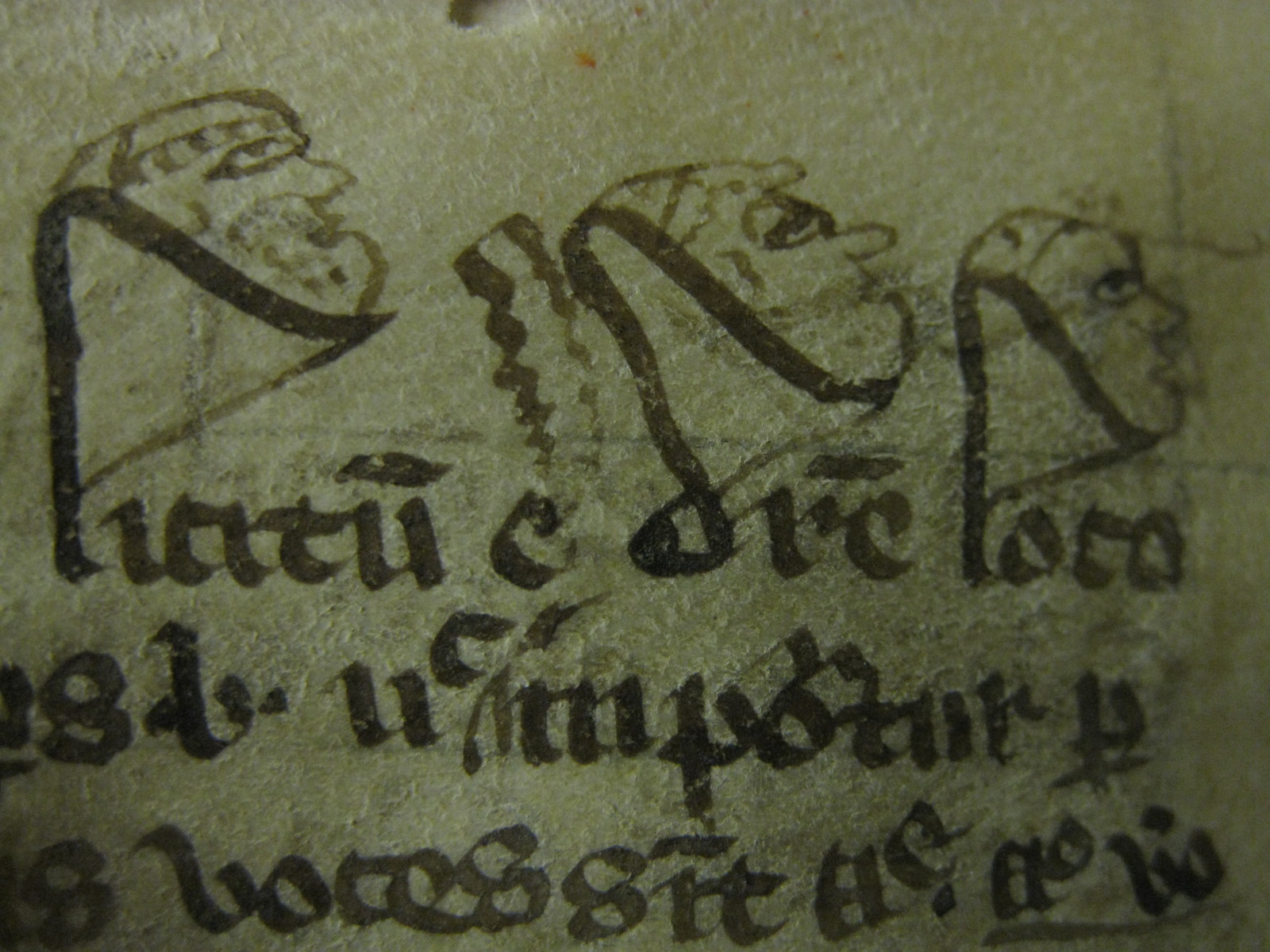
Lecture is now an ancient tradition of the College. The image to the right is a detail of a manuscript of William of Ockham's commentary on Aristotle's Physics (MS 293 of the Merton College Library). The faces are those of some of our academic predecessors. Click on the image to see a larger version. Image courtesy of Julia Walwarth, the Fellow Librarian. |
 |