DPhil PROJECTS IN PLASMA PHYSICS
starting in October 2027
Application deadline: 6 January 2027
Oxford Plasma Theory Group welcomes applications for DPhil studies and research in plasma physics in the areas of magnetic confinement fusion (MCF) and plasma astrophysics (including "laboratory astrophysics")
Potential supervisors: Prof Michael Barnes, Dr Archie Bott, Prof Gianluca Gregori, Prof Alexander Schekochihin, Prof Dmitri Uzdensky
Note that the project descriptions given below are not set in stone and we are willing to discuss modifications and adjustments to them that might better reflect your interests and inclinations.
Size of intake: 1 to 3, but depends on application pool and availability of funding; we took 3 fully funded students in 2026.
- If you are interested in MCF (either theoretical or experimental) or generally in plasma physics (including plasma astrophysics), apply for a DPhil in Theoretical Physics. Note that Theoretical Physics has three separate DPhil competitions: in particle theory, condensed matter and plasma physics. If you are willing to be considered for more than one of these topics, please state so explicitly in your application form.
- If you are interested in
laboratory astrophysics (projects with Dr Bott or
Prof Gregori), you must also apply for a DPhil in Atomic & Laser
Physics.
- If you are interested in plasma astrophysics, apply for a DPhil in Astrophysics. In order to be considered by both sub-departments (Astrophysics and Theoretical Physics) you must also apply for a DPhil in Theoretical Physics (indicating plasma physics as your preferred area). This will increase the number of funding options that we can use for you, and also your chances of acceptance, as we run two separate competitions. This is also a good strategy if you are generally interested in plasma physics and are flexible between its different areas.
- Internal Oxford scholarships: there
are a number of scholarships in physics available at
Oxford and its colleges. In order to be considered
for a scholarship funded by a particular college,
you do not need to select that college as your
college of first choice. There is one (known to us)
exception to this principle: if you are studying at
a Swiss university, apply to Lincoln
College to be eligible for a Berrow Foundation
Scholarship. If you are from India (or
certain other developing countries), make sure to
indicate on your application that you wish to be
considered for a Felix
Scholarship.
- Choice of college: you may apply to
any college that accepts graduate applicants in
Physics. Choice of college can prove important for
your life as a graduate student: different colleges
offer different levels of support in terms of
research funds, accommodation, social integration
etc. We therefore recommend that you do not leave the
college choice blank, but do some research
on which college suits you best. We are happy to
give informal advice on the matter. Here is the list
of colleges where faculty members offering plasma
projects are Fellows: Merton (A. Schekochihin), LMH
(G. Gregori), Trinity
(A.
Bott), Univ (M. Barnes).
- If you are considering applying for an external scholarship and require our endorsement, in the first instance please contact the supervisor with whom you are most interested in working. Note the opportunities for Commonwealth Scholarships.
- You are welcome to address inquiries on science to any of the project supervisors listed below and on the logistical aspects of applying to Dr Derek Hollman (but do please check first if your question is perhaps already answered here).
- All graduate students in plasma physics have access to graduate-level courses taught with the Oxford Master Course in Mathematical and Theoretical Physics (to which you can also apply as a stand-alone MSc degree) and the Oxford-Warwick-Imperial Centre for Postgraduate Training in Plasma Physics and High Energy Density Science.

Projects in Fusion Plasmas and in Fundamental Plasma Theory
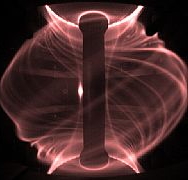
Our magnetic-confinement-fusion theory projects are offered jointly with researchers at the U.K.A.E.A. Culham Centre for Fusion Energy.
At the application stage, you are not required to (although you may if you wish) indicate which project you prefer --- we will consider all applicants purely on intellectual merit. If you are offered admission, we will strive to give you the opportunity to work on the project of your choice.
1. TBA
Supervisor: Prof Michael Barnes
UKAEA co-supervisors: Dr Sarah Newton & Dr John Omotani
2. Explaining suprathermal ion populations produced in ignited inertial-confinement-fusion plasmas
Supervisors: Dr Archie Bott & Prof Alexander Schekochihin
[for this project, we recommend applying to both DPhil in Atomic & Laser Physics and DPhil in Theoretical Physics]
Background Reading:
1. H. Abu-Shawareb et al., Phys. Rev. Lett. 129, 075001 (2022)
2. H. Abu-Shawareb et al., Phys. Rev. Lett. 132, 065102 (2024)
3. A. Zylstra et al., Nature 601, 542 (2022)
4. E. P. Hartouni et al., Nature Phys. 19, 72 (2023)
5. J. J. van de Wetering et al., Phys. Rev. E 112, 045207 (2025)
Supervisor: Prof Michael Barnes
UKAEA co-supervisors: Dr Sarah Newton & Dr John Omotani
2. Explaining suprathermal ion populations produced in ignited inertial-confinement-fusion plasmas
Supervisors: Dr Archie Bott & Prof Alexander Schekochihin
[for this project, we recommend applying to both DPhil in Atomic & Laser Physics and DPhil in Theoretical Physics]
Recent indirect-drive inertial-confinement-fusion
(ICF) experiments at the National Ignition Facility (NIF)
have, for the first time, demonstrated ignition in a
controlled fusion experiment [1,2]. In such experiments, the
plasmas achieved at the centre of the deuterium-tritium
capsule (the "hot spot") during its maximum compression are
sufficiently hot and dense for heating by fusion-produced
alpha particles to overcome other cooling mechanisms,
leading to the possibility of high energy gain [3]. A
surprising observation from these experiments is a
discrepancy between measured neutron spectra and what would
be expected if the plasma's underlying ion distribution
function obeyed the Maxwell-Boltzmann statistics. Instead,
the data suggests that a robust population of suprathermal
ions is produced [4,5]. In this project, a student would
investigate various possible explanations for this
phenomenon, and in particular, acceleration due to kinetic
plasma instabilities and dynamics. Understanding these
effects could be vital for realising robust ICF implosions
with target gain well beyond unity, and their accurate
modelling.
Background Reading:
1. H. Abu-Shawareb et al., Phys. Rev. Lett. 129, 075001 (2022)
2. H. Abu-Shawareb et al., Phys. Rev. Lett. 132, 065102 (2024)
3. A. Zylstra et al., Nature 601, 542 (2022)
4. E. P. Hartouni et al., Nature Phys. 19, 72 (2023)
5. J. J. van de Wetering et al., Phys. Rev. E 112, 045207 (2025)

Projects in Plasma Astrophysics and Laser Plasmas
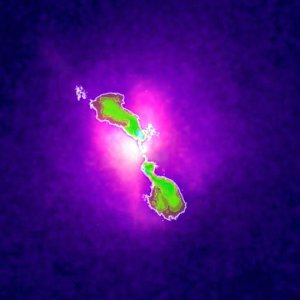
Candidates interested in any of these projects or generally in plasma astrophysics, astrophysical turbulence and/or dynamo theory are welcome to get in touch with prospective supervisors for further information. A more bespoke project can be designed to align with the inclinations and interests of the student (for example how much emphasis is placed on analytical vs. numerical methods or kinetic theory vs. fluid dynamics, etc., is negotiable).
3. Magnetised plasma turbulence: from laser lab
to galaxy clusters
Supervisors: Dr Archie Bott, Prof Gianluca Gregori, & Prof Alexander Schekochihin
[for this project, we recommend applying to both DPhil in Astrophysics and DPhil in Atomic & Laser Physics]
Supervisors: Dr Archie Bott, Prof Gianluca Gregori, & Prof Alexander Schekochihin
[for this project, we recommend applying to both DPhil in Astrophysics and DPhil in Atomic & Laser Physics]
There are a
number of possibilities within this project to design, take
part in, and theorise about laboratory experiments employing
laser-produced plasmas to model astrophysical phenomena and
basic, fundamental physical processes in turbulent plasmas.
Recent examples of our work in this field include turbulent
generation of magnetic fields ("dynamo") [1,2], supersonic
turbulence mimicking star-forming molecular clouds [3,4],
diffusion and acceleration of particles by turbulence [5,6],
suppression of thermal conduction in galaxy-cluster-like
plasmas [7]. Our group has access to several facilities
(including the National Ignition Facility, the largest laser
system in the world). Students will also have access to a
laser laboratory on campus, where initial experiments can be
fielded. Depending on the student's inclinations, it is also
possible to pursue a project focused on theory and/or
numerical modelling of plasma phenomena in astrophysical and
laboratory-astrophysical environments.
Background
Reading:
1. P. Tzeferacos et al., "Laboratory evidence of dynamo amplification of magnetic fields in a turbulent plasma," Nature Comm. 9, 591 (2018)
2. A. F. A. Bott et al., "Time-resolved fast turbulent dynamo in a laser plasma," PNAS 118, e2015729118 (2021)
3. T. G. White et al.,"Supersonic plasma turbulence in the laboratory," Nature Comm. 10, 1758 (2019)
4. A. F. A. Bott et al., "Proton imaging of stochastic magnetic fields," J. Plasma Phys. 83, 905830614 (2017)
5. L. E. Chen et al., "Transport of high-energy charged particles through spatially intermittent turbulent magnetic fields," Astrophys. J. 892, 114 (2020)
6. J. C. Y. Chu et al., "Measurement of ion acceleration and diffusion in a laser-driven magnetized plasma," Nature Comm. 17, 3354 (2026)
7. J. Meinecke et al., "Strong suppression of heat conduction in a laboratory analogue of galaxy-cluster turbulent plasma," Science Adv. 8, eabj6799 (2022)
4. Microphysics of gamma-ray bursts
Supervisors: Prof Gianluca Gregori, Prof Subir Sarkar, & Prof Dmitri Uzdensky
[for this project, we recommend applying to both DPhil in Astrophysics and DPhil in Atomic & Laser Physics]
Background Reading:
1. C. D. Arrowsmith et al., "Laboratory realisation of relativistic pair-plasma beams," Nature Comm. 15, 5029 (2024)
5. Free-energy flows and universal equilibria in turbulent astrophysical plasmas
Supervisors: Prof Alexander Schekochihin & Prof Michael Barnes
[for this project, we recommend applying to both DPhil in Astrophysics and DPhil in Theoretical Physics]
In magnetised astrophysical plasmas, there is a turbulent cascade of electromagnetic fluctuations carrying free energy from large to small scales. The energy is typically extracted from large-scale sources (e.g., in the solar wind, the violent activity in the Sun's corona; in accretion discs, the Keplerian shear flow; in galaxy clusters, outbursts from active galactic nuclei) and deposited into heat---the internal energy of ions and electrons. In order for this dissipation of energy to happen, the energy must reach small scales---in weakly collisional plasmas, these are small scales in the 6D kinetic phase space, i.e., what emerges is large spatial gradients of electric and magnetic fields and large gradients of the particle distribution functions with respect to velocities. This prompts two fundamental questions: (1) how does the energy flow through the 6D phase space and what therefore is the structure of the fluctuations in this space: their spectra, phase-space correlation functions etc. [1,2,3] (these fluctuations are best observed in the solar wind, but we can measure density and magnetic fluctuations even in extragalactic plasmas, via X-ray and radio observations); (2) when turbulent fluctuations are dissipated into particle heat, how is their energy partitioned between various species of particles that populate the plasma: electrons, bulk ions, minority ions, fast non-thermal particles (e.g., cosmic rays) [4,5]. The latter question is particularly important for extragalactic plasmas because all we can observe is radiation from the particles and knowing where the internal energy of each species came from is key to constructing and verifying theories both of turbulence and of macroscale dynamics and thermodynamics. This project has an analytical and a numerical dimension (which of these will dominate depends on the student's inclinations). Analytically, we will work out a theory of phase-space cascade at spatial scales between the ion and electron Larmor scales. Numerically, we will simulate this cascade using "gyrokinetic" equations---an approach in which we average over the Larmor motion and calculate the distribution function of "Larmor rings of charge" rather than particles (this reduces the dimension of phase space to 5D, making theory more tractable and numerics more affordable).
With a theory of plasma turbulence in hand, it is possible to attack what is probably the most fundamental question of the field: in the absence of collisions, are there universal equilibria, or classes of equilibria, independent of initial conditions, that a turbulent plasma will want to converge to? There is some recent progress indicating that the answer is yes and that one can predict statistical-mechanically the emergence of universal power-law (in particle energy) distributions [6]---this is exciting both on its own merits and because of the astrophysical challenge of explaining theoretically power-law distributions that are observed for, e.g., cosmic rays or solar-wind electrons. How to construct a theory of that for a magnetised, turbulent plasma is an open and exciting question. Attempting to do this will again involve kinetic theory and/or kinetic simulations.
Background Reading:
1. A. A. Schekochihin et al., "Astrophysical gyrokinetics: kinetic and fluid turbulent cascades in magnetized weakly collisional plasmas," Astrophys. J. Suppl. 182, 310 (2009)
2. A. A. Schekochihin et al., "Phase mixing vs. nonlinear advection in drift-kinetic plasma turbulence," J. Plasma Phys. 82, 905820212 (2016)
3. R. Meyrand et al., "Fluidization of collisionless plasma turbulence," PNAS 116, 1185 (2019)
4. Y. Kawazura et al., "Thermal disequilibration of ions and electrons by collisionless plasma turbulence," PNAS 116, 771 (2019)
5. J. Squire et al., "High-frequency heating of the solar wind triggered by low-frequency turbulence," Nature Astron. 6, 715 (2022)
6. R. J. Ewart et al., "Relaxation to universal non-Maxwellian equilibria in a collisionless plasma," PNAS 122, e2417813122 (2025); see also A. Schekochihin's MMathPhys Lecture Notes, sec. 12-14
1. P. Tzeferacos et al., "Laboratory evidence of dynamo amplification of magnetic fields in a turbulent plasma," Nature Comm. 9, 591 (2018)
2. A. F. A. Bott et al., "Time-resolved fast turbulent dynamo in a laser plasma," PNAS 118, e2015729118 (2021)
3. T. G. White et al.,"Supersonic plasma turbulence in the laboratory," Nature Comm. 10, 1758 (2019)
4. A. F. A. Bott et al., "Proton imaging of stochastic magnetic fields," J. Plasma Phys. 83, 905830614 (2017)
5. L. E. Chen et al., "Transport of high-energy charged particles through spatially intermittent turbulent magnetic fields," Astrophys. J. 892, 114 (2020)
6. J. C. Y. Chu et al., "Measurement of ion acceleration and diffusion in a laser-driven magnetized plasma," Nature Comm. 17, 3354 (2026)
7. J. Meinecke et al., "Strong suppression of heat conduction in a laboratory analogue of galaxy-cluster turbulent plasma," Science Adv. 8, eabj6799 (2022)
4. Microphysics of gamma-ray bursts
Supervisors: Prof Gianluca Gregori, Prof Subir Sarkar, & Prof Dmitri Uzdensky
[for this project, we recommend applying to both DPhil in Astrophysics and DPhil in Atomic & Laser Physics]
Gamma-ray
bursts (GRBs) are among the most energetic events in the
Universe. They occur at cosmological distances and are the
result of the collapse of massive stars or neutron stars
mergers, with emission of relativistic "fireballs" of
electron-positron pairs. From astrophysical observations,
a wealth of information has been gleaned about the
mechanism that leads to such strong emission of radiation,
with leading models predicting that this is due to the
disruption of the beam as it blasts through the
surrounding plasma. This produces shocks and hydromagnetic
turbulence that generate synchrotron emission, potentially
accelerating to ultra-high energies the protons which are
observed on Earth as cosmic rays. However, there is no
direct evidence of the generation of either magnetic
fields or cosmic rays by GRBs. Estimates are often based
on crude energy equipartition arguments or idealised
numerical simulations that struggle to capture the extreme
plasma conditions. We propose to address this lacuna by
conducting laboratory experiments at accelerator
facilities to mimic the jet propagation through its
surrounding plasma. Our intial work [1] has demonstrated
that we can create enormous beams of electron-positron
plasmas that have properties very similar to GRB
Fireballs. We are now planning new experiments at CERN as
well as at Laboratori Nazionali Frascati (INFN, Italy) to
characterise fully the interaction of these beams with a
surrounding (ambient) plasma. Such experiments will enable
in-situ measurement of the plasma properties, with
exquisite details that cannot be achieved elsewhere. The
experiments also complement numerical simulations by
providing long measurement times extending into the
non-linear regime where numerical simulations are not
possible today. The proposed experiments will study
fundamental physics processes, unveil the microphysics of
GRBs, and provide a new window in high-energy astrophysics
using novel Earth-based laboratory tools.
Background Reading:
1. C. D. Arrowsmith et al., "Laboratory realisation of relativistic pair-plasma beams," Nature Comm. 15, 5029 (2024)
5. Free-energy flows and universal equilibria in turbulent astrophysical plasmas
Supervisors: Prof Alexander Schekochihin & Prof Michael Barnes
[for this project, we recommend applying to both DPhil in Astrophysics and DPhil in Theoretical Physics]
In magnetised astrophysical plasmas, there is a turbulent cascade of electromagnetic fluctuations carrying free energy from large to small scales. The energy is typically extracted from large-scale sources (e.g., in the solar wind, the violent activity in the Sun's corona; in accretion discs, the Keplerian shear flow; in galaxy clusters, outbursts from active galactic nuclei) and deposited into heat---the internal energy of ions and electrons. In order for this dissipation of energy to happen, the energy must reach small scales---in weakly collisional plasmas, these are small scales in the 6D kinetic phase space, i.e., what emerges is large spatial gradients of electric and magnetic fields and large gradients of the particle distribution functions with respect to velocities. This prompts two fundamental questions: (1) how does the energy flow through the 6D phase space and what therefore is the structure of the fluctuations in this space: their spectra, phase-space correlation functions etc. [1,2,3] (these fluctuations are best observed in the solar wind, but we can measure density and magnetic fluctuations even in extragalactic plasmas, via X-ray and radio observations); (2) when turbulent fluctuations are dissipated into particle heat, how is their energy partitioned between various species of particles that populate the plasma: electrons, bulk ions, minority ions, fast non-thermal particles (e.g., cosmic rays) [4,5]. The latter question is particularly important for extragalactic plasmas because all we can observe is radiation from the particles and knowing where the internal energy of each species came from is key to constructing and verifying theories both of turbulence and of macroscale dynamics and thermodynamics. This project has an analytical and a numerical dimension (which of these will dominate depends on the student's inclinations). Analytically, we will work out a theory of phase-space cascade at spatial scales between the ion and electron Larmor scales. Numerically, we will simulate this cascade using "gyrokinetic" equations---an approach in which we average over the Larmor motion and calculate the distribution function of "Larmor rings of charge" rather than particles (this reduces the dimension of phase space to 5D, making theory more tractable and numerics more affordable).
With a theory of plasma turbulence in hand, it is possible to attack what is probably the most fundamental question of the field: in the absence of collisions, are there universal equilibria, or classes of equilibria, independent of initial conditions, that a turbulent plasma will want to converge to? There is some recent progress indicating that the answer is yes and that one can predict statistical-mechanically the emergence of universal power-law (in particle energy) distributions [6]---this is exciting both on its own merits and because of the astrophysical challenge of explaining theoretically power-law distributions that are observed for, e.g., cosmic rays or solar-wind electrons. How to construct a theory of that for a magnetised, turbulent plasma is an open and exciting question. Attempting to do this will again involve kinetic theory and/or kinetic simulations.
Background Reading:
1. A. A. Schekochihin et al., "Astrophysical gyrokinetics: kinetic and fluid turbulent cascades in magnetized weakly collisional plasmas," Astrophys. J. Suppl. 182, 310 (2009)
2. A. A. Schekochihin et al., "Phase mixing vs. nonlinear advection in drift-kinetic plasma turbulence," J. Plasma Phys. 82, 905820212 (2016)
3. R. Meyrand et al., "Fluidization of collisionless plasma turbulence," PNAS 116, 1185 (2019)
4. Y. Kawazura et al., "Thermal disequilibration of ions and electrons by collisionless plasma turbulence," PNAS 116, 771 (2019)
5. J. Squire et al., "High-frequency heating of the solar wind triggered by low-frequency turbulence," Nature Astron. 6, 715 (2022)
6. R. J. Ewart et al., "Relaxation to universal non-Maxwellian equilibria in a collisionless plasma," PNAS 122, e2417813122 (2025); see also A. Schekochihin's MMathPhys Lecture Notes, sec. 12-14