KINETIC THEORY
Oxford Master Course in Mathematical and Theoretical Physics
("MMathPhys")
&
Centre for Postgraduate Training in Plasma Physics and High Energy Density Science
followed by
ADVANCED TOPICS IN PLASMA PHYSICS
 |
 |
 |
 |
 |
Dr Paul Dellar, Prof Alexander Schekochihin, Dr Jean-Baptiste Fouvry
TA: Toby Adkins
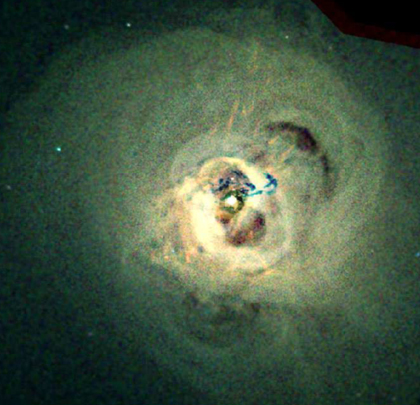
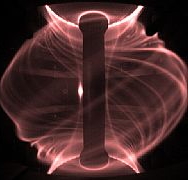
This is a core MMathPhys course which we expect to be of interest to graduate students specialising in the physics (or applied mathematics) of gases and plasmas, astrophysics, and condensed matter.
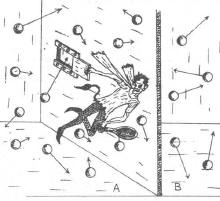
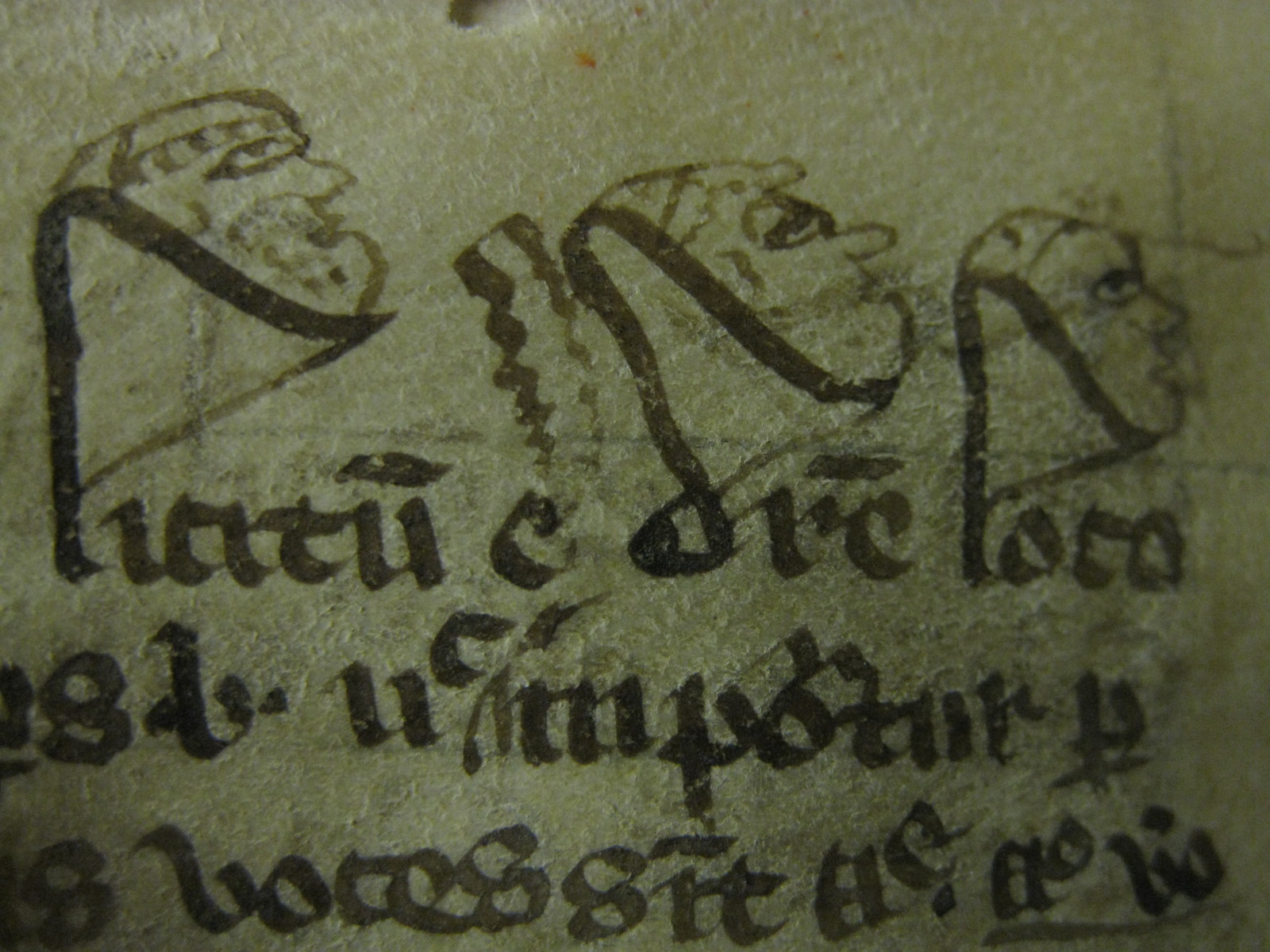 A sketch of students (or, perhaps, fellows) in a manuscript of William of Ockham's commentary on Aristotle's Physics (MS293 from the Merton College library, image courtesy of J. Walwarth). |
Michaelmas
Term
2020 LECTURES (28 hours) Monday 10:00-11:30 (weeks 2,3,4,7,8) Monday 16:00-18:00 (weeks 2,3,7,8) Monday 16:30-18:00 (weeks 4,5,6) Tuesday 12:00-13:00 (weeks 2,3,4,7,8) Tuesday 16:30-18:00 (weeks 3,4) on ZOOM (links by email from Jasmine, not public) Virtual blackboard for Part II (plasma) lectures Virtual blackboard for Part III (GD) lectures CLASSES Tuesday 16:00-18:00 (weeks 5, 7), 14:00-16:00 (week 9) on ZOOM (link by email from Jasmine or Toby) Course materials, reading suggestions, scheduling notices, problem sets to appear below. |
A sketch of students (or, perhaps, fellows) in a manuscript of William of Ockham's commentary on Aristotle's Physics (MS293 from the Merton College library, image courtesy of J. Walwarth). |
||
| PART I: KINETIC THEORY OF GASES |
9 hours (Mon 19.10.20 - Tue
27.10.20) Dr
Paul Dellar
Timescales
and length scales. Hamiltonian mechanics of N particles. Liouville’s
Theorem. Reduced distributions. BBGKY hierarchy. Boltzmann-Grad limit
and truncation of BBGKY equation for the 2-particle distribution
assuming a short-range potential. Boltzmann's collision operator and
its conservation properties. Boltzmann's entropy and the H-theorem.
Maxwell-Boltzmann distribution. Linearised collision operator. Model
collision operators: the BGK operator, Fokker-Planck operator.
Derivation of hydrodynamics via Chapman-Enskog expansion. Viscosity and
thermal conductivity.
The objective of this part of the course is to introduce the basic language of kinetic theory and show how, starting from a kinetic description, one can construct fluid equations for a collisional system close to Maxwellian equilibrium. Lecture 1+ (10:00-11:30; Mon 19.10.20) Lectures 2-3 (16:00-18:00; Mon 19.10.20) Lecture 4 (12:00-13:00; Tue 20.10.20) Lecture 5+ (10:00-11:30; Mon 26.10.20) Lectures 6-7 (16:00-18:00; Mon 26.10.20) Lecture 8 (12:00-13:00; Tue 27.10.20) |
Problem Class 1 Tuesday 10.11.20 at 16:00-18:00 Homework due by 11:59 on 6.11.20 to Toby Adkins Lecture Notes Paul Dellar's webpage for this part of the course, including lecture notes, problem set, and reading suggestions |
||
| PART II: KINETIC THEORY OF PLASMAS & QUASIPARTICLES |
10 hours (Tue 27.10.20 - Mon
16.11.20) Prof Alexander
Schekochihin Kinetic
description of a plasma: Debye shielding, micro- vs. macroscopic
fields, Vlasov-Maxwell equations. Klimontovich’s version of BBGKY
(non-examinable). Plasma frequency. Partition of the dynamics into
equilibrium and fluctuations. Linear theory: initial-value problem for
the Vlasov-Poisson system, Laplace-tranform solution, the dielectric
function, Landau prescription for calculating velocity integrals,
Langmuir waves, Landau damping and kinetic instabilities (driven by
beams, streams and bumps on tail), Weibel instability, sound waves,
their damping, ion-acoustic instability, ion-Langmuir oscillations.
Energy conservation. Heating. Entropy and free energy. Ballistic
response and phase mixing. Role of collisions; coarse-graining.
Elements of kinetic stability theory. Quasilinear theory: general
scheme. QLT for bump-on-tail instability in 1D. Introduction to
quasiparticle kinetics.
The main new set of concepts in this part of the course, compared to Part I, is about the behaviour of a system that has not only particles but also fields: how do they exchange energy? how do they interact? |
Problem Set 2: you will
find it in the Lecture Notes Problem Class 2 Tuesday 24.11.20 at 16:00-18:00 Homework due by 11:59 on 20.11.20 to Toby Adkins The latest version of the typed notes is available here. Check back for upadtes! Reading: |
||
| Lecture 9+ (16:30-18:00; Tue 27.10.20) Kinetic
description of a plasma: Debye shielding, micro- vs. macroscopic
fields, Vlasov-Landau-Maxwell equations. Basic properties of the Landau
collision integral. Plasma frequency. Lecture
Notes sec 1.1-1.6, 1.8-2.1
|
Klimontovich sec 4, 5, 11 (his version of BBGKY etc.) Helander sec 3 (coll. operator) Helander sec 4 (fluid eqns) Braginskii (Chapman-Enskog for plasma, original derivation) |
|||
|
Lecture
10+ (10:00-11:30; Mon 2.11.20) Slow equilibrium and fast
fluctuations. Outline of
the hierarchy of approximations: linear, quasilinear, weak turbulence,
strong turbulence.
Linear theory: initial-value problem for the Vlasov-Poisson system, Laplace-transform solution, the dielectric function, plasma dispersion relation. Lecture
Notes sec 2.2-3.1
|
Zakharov
et al.; Nazarenko (general scheme of weak turbulence theory) Kadomtsev; Sagdeev & Galeev (from linear to QL to WT for plasma) Landau's paper (original derivation) Hazeltine & Waelbroeck sec 6.3, 6.4 Alexandrov et al. sec 2, 4 (all the waves catalogued, with an emphasis on plasma as a dielectric) Sec 4 of my Notes is extracurricular material. You can read it if you like (after Lecture 10, you will know all you need to know to read it), but I am planning to cover this in my TT-2020 follow-on course. |
|||
|
Lecture
11+ (16:30-18:00; Mon 2.11.20)
Linear
theory cont'd: Landau
prescription
for calculating velocity integrals. Solving
the plasma dispersion relation in the slow damping/growth limit. Langmuir waves. Landau damping and
kinetic
instabilities. Sound waves.
Lecture
Notes sec 3.2-3.5, 3.8
|
||||
| Lecture 12 (12:00-13:00; Tue 3.11.20) Linear
theory cont'd: damping of sound waves, ion-acoustic instability,
ion-Langmuir oscillations. Summary of longitudinal waves. Hydrodynamic
beam
instability. You are ready to do Q1, 2, 3/4 of the Problem Set Lecture
Notes sec 3.9-11, 3.7
|
||||
| Lecture 13+ (16:30-18:00; Tue 3.11.20) Energy
conservation. Heating.
Entropy and free energy. Perturbed
distribution function: ballistic
response and phase mixing. Role of collisions; coarse-graining. You are ready to do Q6-8 of the Problem Set Lecture
Notes sec 5.1-5.5
|
Hazeltine & Waelbroeck sec
6.2 (Landau damping and phase mixing without Laplace transforms) |
|||
| Lecture 14+ (16:30-18:00; Mon 9.11.20) Structure of the perturbed
distribution near a resonance: the Case-van Kampen mode. Quasilinear theory: general scheme. QLT for bump-on-tail instability in 1D: plateau, spectrum of waves. Lecture
Notes sec 5.6, 6.1,6.3-6.4
|
Krall
& Trivelpiece sec 10 Kadomtsev sec I.3 Sagdeev & Galeev sec II-2 (...and read on for more advanced topics) |
|||
|
Lecture
15+ (16:30-18:00; Mon
16.11.20) QLT in 1D con'd: energy of resonant and non-resonant particles, heating of the thermal bulk.
You are ready to do Q9, 10, or 11 of the Problem Set Reformulation of QLT in quasiparticle formalism. Lecture
Notes sec 6.5-6.6, 7.1
|
Tsytovich sec 3, 5, 7 (on plasmon kinetics and beyond) Peierls's and Ziman's books (on electrons and phonons in metals) |
|||
| PART III: KINETIC THEORY OF SELF-GRAVITATING SYSTEMS |
9 hours (Mon
23.11.20 - Tue 1.12.20) Dr Jean-Baptiste
Fouvry
Unshielded
nature of gravity and implications for self-gravitating systems.
Mean-field approximation with simple examples. Negative specific heat
and impossibility of thermal equilibrium. Relaxation driven by
fluctuations in mean field. Evaporation. Angle-action variables.
Potential-density pairs. Long-time response to initial perturbation.
Fokker-Planck equation. Computation of the diffusion coefficients in
terms of resonant interactions. Application to a tepid disc.
Here again there are particles (stars) and fields (gravitational). The key feature is that there are no collisions at all and one must understand the behaviour of a kinetic system that is not close to a Maxwellian equilibrium. Lecture 16+ (10:00-11:30; Mon 23.11.20) Lectures 17-18 (16:00-18:00; Mon 23.11.20) Lecture 19 (12:00-13:00; Tue 24.11.20) Lecture 20+ (10:00-11:30; Mon 30.11.20) Lectures 21-22 (16:00-18:00; Mon 30.11.20) Lecture 23 (12:00-13:00; Tue 1.12.20) |
Problem Set 3: you will
find it on J-B Fouvry's webpage Problem Class 3 Tuesday 8.12.20 at 14:00-16:00 Homework due by 11:59 on 4.12.20 to Toby Adkins J-B Fouvry's webpage for this part of the course, including lecture notes and problem set J. Binney's 2018 Lecture Notes |
||
|
ADVANCED
TOPICS in PLASMA PHYSICS Prof Alexander Schekochihin TA: David Hosking Trinity Term 2021 LECTURES (8 hours) email Alex Schekochihin to receive Zoom link Monday and Wednesday 17:00-18:00 (weeks 1-4) Virtual blackboard |
|
||
| KINETICS of QUASIPARTICLES |
Lecture
1 (17:00-18:00; Mon 26.04.21)
Recap: QLT in the language of quasiparticles.
Lecture
Notes sec 7.1
|
Problem Set: any 8 exercises from sec 7-8 of Lecture Notes Due: 23:59 on Sunday week 7 to David Hosking |
||
|
Lecture
2 (17:00-18:00; Wed 28.04.21)
Weak turbulence:
kinetic equations for weakly interacting waves --- 3-wave and 4-wave
interactions, Langmuir-sound turbulence.
Lecture
Notes sec 7.2.1-3
|
||||
|
Lecture
3 (17:00-18:00; Mon 3.05.21)
WT cont'd: induced
scattering. "Real" collisions. Statatistical mechanics of quasiparticles (equilibrium and non-equilibrium). Validity of WT.
Lecture
Notes sec 7.2.4-7.5
|
||||
| LANGMUIR TURBULENCE |
Lecture
4 (17:00-18:00; Wed 5.05.21)
Zakharov equations: physical derivation. Lecture
Notes sec 8.1-8.2
|
Work independently through sec 8.2:
systematic kinetic derivation of Zakharov equations |
||
|
Lecture
5 (17:00-18:00; Mon 10.05.21) Hamiltonian form of Zakharov equations. Derivation of WT kinetic
equations via perturbation theory and random-phase approximation.
|
||||
|
Lecture
6 (17:00-18:00; Wed 12.05.21)
Solution of WT equations. Direct and inverse cascades. Break down of WT.
Lecture
Notes sec 8.4.3-7
|
||||
| Lecture 7 (17:00-18:00; Mon 17.05.21)
Langmuir condensate: a new kinetics. A new fluid dynamics and modulational instability. Lecture
Notes sec 8.5.1-2
|
||||
| Lecture 8 (17:00-18:00; Fri 22.05.20)
Langmuir collapse and strong Langmuir turbulence. Lecture
Notes sec 8.5.4-8.6
|
READING LIST for the
Kinetic Theory Course
PART I: see reading suggestions on Paul
Dellar's course webpage
PART II (including "further reading"):
PART II (including "further reading"):
- A. F. Alexandrov, L. S. Bogdankevich & A. A. Rukhadze, Principles of Plasma Electrodynamics
(Springer 1984) (Amazon)
- S. I. Braginskii, "Transport processes in a plasma," Rev. Plasma. Phys. 1, 205 (1965) (pdf)
- S. C. Cowley, Lecture
notes on plasma physics (UCLA 2003-07)
- R. D. Hazeltine & F. L.
Waelbroeck, The Framework Of Plasma
Physics (Perseus Books 1998)
(Amazon)
- P. Helander & D. J. Sigmar, Collisional
Transport in Magnetized Plasmas (CUP 2005) (Amazon)
- B. B. Kadomtsev, Plasma Turbulence (Academic Press 1965) (pdf)
- Yu. L. Klimontovich, The Statistical Theory of Non-Equilibrium Processes in a Plasma (Pergamon 1967) (Amazon)
- N. A. Krall & A. W. Trivelpiece, Principles of Plasma Physics (McGraw-Hill 1973) --- available in TP Discussion Room Library
- L. Landau, "On the vibrations of the electronic plasma," J. Phys. USSR 10, 25 (1946) (pdf)
- E. M. Lifshitz & L. P. Pitaevskii, Physical Kinetics (Volume 10 of L. D. Landau and E. M. Lifshitz's Course of Theoretical Physics) (Elsevier 1976) (Amazon)
- S. Nazarenko, Wave Turbulence
(Springer 2011) (Amazon)
- R. Z. Sagdeev & A. A. Galeev, Nonlinear Plasma Theory (W. A. Benjamin 1969) (pdf)
- V. N. Tsytovich, Lectures on
Nonlinear Plasma Kinetics (Springer 1995) (Amazon)
--- available in TP Discussion Room Library
- V. E. Zakharov, V. S. Lvov & G. Falkovich, Kolmogorov Spectra of Turbulence I: Wave Turbulence (Springer 1992) (Amazon) (updated online version)
- J. M. Ziman, Electrons and Phonons: The Theory of Transport Phenomena in Solids (OUP 2001) (Amazon) --- available in TP Discussion Room Library
- J. Binney & S. Tremaine, Galactic Dynamics (Princeton University Press 2008) (Amazon)
- J. Binney, Dynamics of secular evolution, arXiv:1202.3403